The dawn of 2026 finds the world’s most iconic aerospace giant at a historical crossroads. The transition of leadership—specifically the departure of Dave Calhoun and the subsequent installment of a new executive regime—is being framed by analysts not just as a corporate pivot, but as a desperate attempt to salvage the institutional credibility of The Boeing Company (NYSE: BA). For investors and industry stakeholders, the narrative of 2026 is no longer about “if” Boeing can recover, but “when” its balance sheet will finally reflect the massive demand for its commercial products.
This deep-dive analysis explores the structural financial strain, the aggressive yet fragile production roadmaps, and the high-stakes certification hurdles that will determine whether the current leadership shake-up is a catalyst for renewal or merely a changing of the guard in the midst of a multi-year turbulence.
Financial Fundamentals: The Heavy Price of Recovery
To understand the magnitude of the ongoing crisis, one must first confront the sheer scale of Boeing’s financial hemorrhaging. The company entered 2026 carrying a staggering debt load of approximately $44.6 billion, a figure that reflects years of negative free cash flow driven by the cumulative effects of the 737 MAX groundings, pandemic-era disruptions, and a series of high-profile manufacturing defects. In the final quarters of 2025, Boeing reported a GAAP net loss of $7.14 per share, a metric that underscore the persistent “operating leak” within its Commercial Airplanes (BCA) segment.
However, the financial story is shifting. Despite the losses, Boeing’s third-quarter 2025 revenue surged by 30.4% year-over-year to $23.27 billion, signaling that the revenue engine is beginning to turn, even if the profit engine is still stalled. The most critical metric for the 2026 outlook is the Free Cash Flow (FCF). After years of burning through billions, Boeing’s CFO Jay Malave has signaled a pivotal shift: the company expects to reach positive free cash flow in 2026, targeting a range between $3 billion and $5.6 billion. This projected surplus is vital because Boeing faces a “debt cliff” in the coming 24 months, with approximately $8 billion in maturities due in 2026 alone. The success of the current CEO shake-up will be measured primarily by the company’s ability to generate enough internal cash to service this debt without further dilutive equity raises or high-interest credit lines.
Strategic Planning and the “Lean” Manufacturing Reset
The leadership transition is deeply rooted in a failure of culture and quality control. The “ongoing crisis” mentioned in recent reports refers back to the systemic issues identified by the FAA, culminating in the mid-air door plug failure on an Alaska Airlines flight. The new management’s primary business development goal for 2026 is the implementation of a “back-to-basics” engineering-first culture. This is not just corporate rhetoric; it has manifested in the strategic decision to re-acquire Spirit AeroSystems.
By bringing Spirit—the manufacturer of roughly 70% of 737 aerostructures—back in-house, Boeing is attempting to exert “nose-to-tail” control over its supply chain. This merger, expected to reach full operational integration by the second half of 2026, is the cornerstone of the company’s plan to eliminate the “traveled work” (tasks completed out of sequence) that has plagued its Renton and Everett factories. Management has committed to a plan that stabilizes production at a “rhythmic” cadence rather than chasing delivery volume at the expense of quality. This shift in planning is a direct response to the FAA’s strict oversight, which had previously capped 737 MAX production at 38 aircraft per month.
Product Development and the Certification Gauntlet
The core of Boeing’s future profitability lies in its narrow-body and wide-body roadmaps, both of which are currently navigating a gauntlet of regulatory scrutiny. As we move into 2026, the progress of three specific aircraft will dictate the stock’s performance and the company’s market share against its arch-rival, Airbus.
The 737 MAX 10, the largest variant of the MAX family, is the company’s answer to the highly successful Airbus A321neo. Certification for the MAX 10 is currently targeted for the latter half of 2026. This aircraft is critical because it represents a significant portion of the $636 billion backlog. Airlines like United and Ryanair have built their growth strategies around this model, and any further slippage in the certification timeline would likely trigger penalty payments and order cancellations. Similarly, the 737 MAX 7 is awaiting final FAA exemptions to be cleared for service, a milestone the new CEO is expected to prioritize to clear the “storage” inventory at Moses Lake.
On the wide-body front, the 777X (777-9) remains a source of both hope and immense financial pressure. In late 2025, Boeing took a $4.9 billion charge related to further delays in the 777X program, pushing initial deliveries to 2027. This delay is particularly painful as it ties up massive amounts of working capital in “inventory build-up”—aircraft that are physically built but cannot be delivered until the FAA grants type certification. For the 2026 fiscal year, the company’s goal is to maintain “stability” in the 787 Dreamliner production rate, aiming for 10 deliveries per month by late 2026, which would provide a much-needed steady stream of high-margin cash.
Market Expansion and the Global Duopoly Balance
Despite its internal turmoil, Boeing’s market position is protected by the global aerospace duopoly. The demand for new, fuel-efficient aircraft is at an all-time high, with global backlogs reaching nearly 14,000 aircraft between Boeing and Airbus. In 2025, while Airbus “won” the delivery race by a margin of nearly 200 aircraft, Boeing actually outperformed its rival in gross orders, securing over 1,000 commitments from airlines.
This suggests that the market has not “abandoned” Boeing; rather, the industry is waiting for it to fix itself. The market expansion strategy for 2026 is heavily focused on the Middle East and Southeast Asia. The Farnborough and Dubai Air Shows in 2026 are expected to be venues for major wide-body order announcements, potentially including a larger “777-10” variant to compete with the A350-1000. Boeing’s Global Services segment remains a bright spot, generating a consistent operating margin of approximately 17.5%. This division, which provides parts and maintenance to the existing global fleet, acts as a “cash cow” that funds the more volatile Commercial Airplanes unit.
Defense, Space & Security: A Segment in Search of Stability
While the commercial crisis takes center stage, Boeing’s Defense, Space & Security (BDS) segment is fighting its own battles. In recent quarters, this division has been a drag on earnings, reporting slim operating margins of just 1.7% to 1.9%. The “crisis” here is one of fixed-price contracts. Historically, Boeing bid aggressively on government contracts (such as the KC-46 Tanker and Air Force One) under fixed-price terms that did not account for the post-pandemic surge in labor and material costs.
For 2026, the strategic pivot in the Defense unit is to move toward “cost-plus” or more flexible contract structures for new bids. The segment’s backlog stands at $76 billion, and with global geopolitical tensions at a generational high, the demand for Boeing’s defense products—from the F-15EX to the P-8 Poseidon—is robust. However, the financial success of this unit depends on the management’s ability to de-risk its existing portfolio of fixed-price programs. The ongoing CEO shake-up includes a mandate to fix the “execution gap” in Defense, ensuring that these massive contracts become profit contributors rather than liabilities.
Important Events and Regulatory Oversight in 2026
Several key “inflection points” will define Boeing’s trajectory in 2026. First is the FAA’s monitoring status. In late 2025, the FAA allowed Boeing to increase the 737 production cap from 38 to 42 aircraft per month. A further “rate break” to 47 and then 52 aircraft per month is the target for 2026. If Boeing can hit these numbers without quality lapses, it will signal to the market that the “ongoing crisis” is truly in the rearview mirror.
Second is the DOJ and legal settlements. Boeing continues to navigate the legal fallout of past crashes, with significant payments scheduled for 2026. The resolution of these legal “overhangs” is essential for the stock to achieve a traditional valuation multiple. Finally, the Board of Directors’ re-election and the formal unveiling of the new CEO’s “Strategic 2030 Plan” will be the most-watched corporate events of the year. Investors are looking for a clear commitment to an “all-new” clean-sheet aircraft design to eventually replace the 737 MAX, though most analysts do not expect a formal launch of such a program until the company’s balance sheet is significantly repaired.
The Investor Analysis: Risk vs. Backlog
For the institutional analyst, Boeing presents one of the most complex “value versus risk” propositions in the Dow Jones Industrial Average. On one hand, you have a company with an EBITDA margin that declined to near zero in 2025 due to the $4.9 billion 777X charge. On the other hand, you have a firm with a $636 billion backlog and a dominant position in a critical global industry.
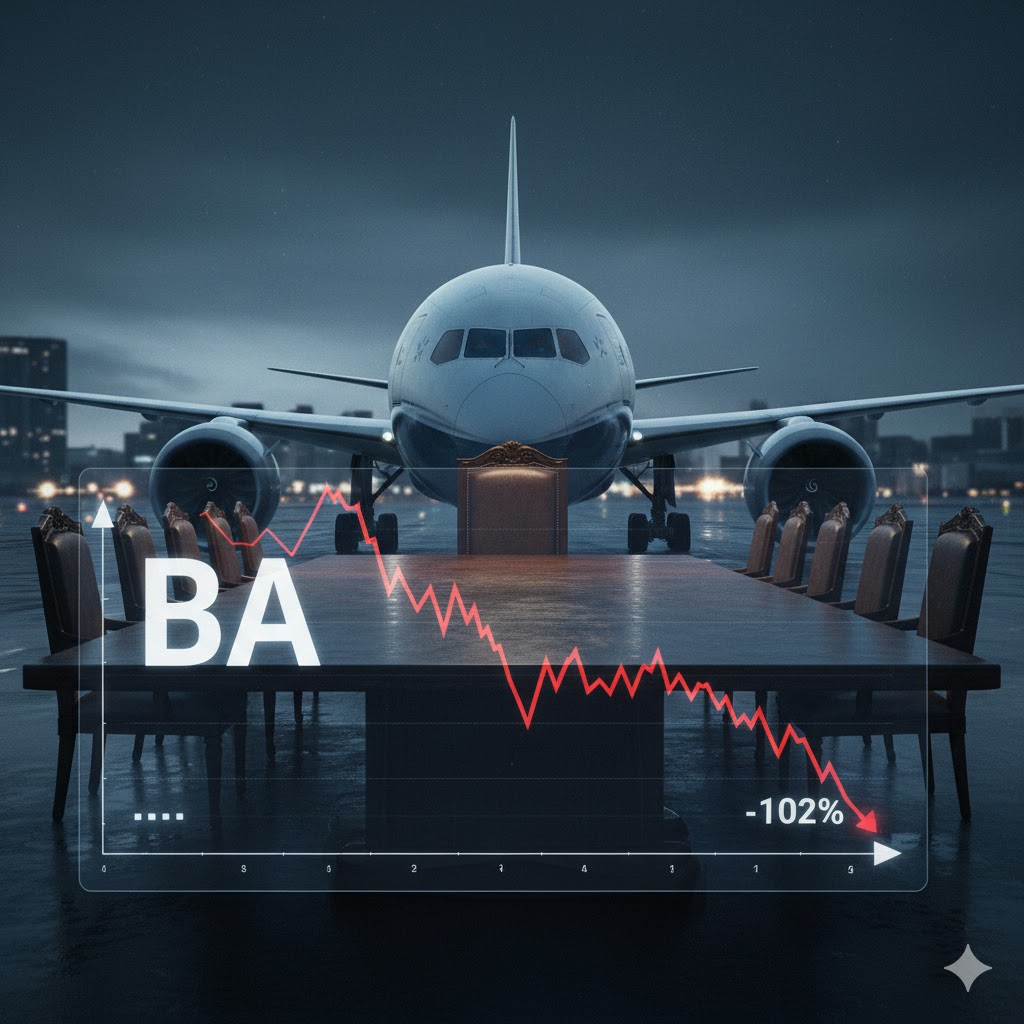
The “CEO shake-up” is the market’s primary hope for a “re-rating.” If the new leadership can deliver on the $5.6 billion free cash flow target for 2026, the stock’s current valuation could be seen as an attractive entry point for long-term holders. However, the risks are non-trivial. Supply chain bottlenecks, particularly in engine components and specialized titanium parts, remain a threat to the planned production ramp-up. Furthermore, the “safety culture” fix is not something that happens in a single quarter; it requires a multi-year commitment that could slow down production in the short term.
Summary of 2026 Projections and Data Points
- 737 MAX Production: Aiming to scale from 42 to 53 aircraft per month by Q4 2026.
- 787 Dreamliner Production: Targeting a steady state of 10 per month.
- Total Deliveries: Analysts forecast between 700 and 720 aircraft for the full year 2026.
- Revenue Projection: Approximately $80 billion for the fiscal year, a significant jump from 2024 levels.
- Earnings Per Share (EPS): Consensus estimates suggest a return to profitability with an EPS of roughly $3.50.
- Free Cash Flow: Projected positive $3B to $5.6B, reversing years of cash burn.
As 2026 progresses, the phrase “ongoing crisis” may slowly be replaced by “operational recovery” in financial publications. The leadership shake-up has provided the necessary “shock to the system” to reset the narrative, but the execution remains in the hands of the engineers on the factory floor and the pilots in the certification test flights. Boeing remains a structural titan of industry, but its path to redemption is paved with the need for perfection in a world that is no longer willing to accept anything less.
Conclusion
The story of Boeing in 2026 is a testament to the resilience of the aerospace sector and the high cost of corporate negligence. While the CEO shake-up has injected a sense of urgency into the company’s turnaround efforts, the “crisis” is far from over. The coming twelve months will be a period of intense scrutiny as the company attempts to ramp up production of its core 737 and 787 programs while simultaneously chasing the certification of its next-generation fleet.
Investors will be watching for consistency in delivery numbers and transparency in quality audits. If Boeing can navigate 2026 without another major safety incident or a further slip in the 777X timeline, it will have built the foundation for a sustainable recovery. For now, the “crisis” is being managed with a combination of financial discipline and regulatory cooperation. The aircraft are built, the orders are signed, and the market is ready; the only question remaining is whether the new Boeing can deliver them with the safety and quality that once made the company the gold standard of the skies.
Leave a Reply