The global automotive landscape is currently navigating a period of profound structural realignment, marked by a decisive retreat from international markets by some of the industry’s most storied players. At the center of this tectonic shift is General Motors (NYSE: GM), whose recent strategic pivots have sent ripples through the financial community. As the company moves to shutter various foreign production facilities to consolidate its North American footprint and accelerate its electric vehicle (EV) and autonomous driving (AD) programs, the investment community is deeply divided. While management frames these closures as a necessary “de-risking” of the balance sheet, a growing contingent of market analysts warns that a withdrawal from global markets could signal a permanent loss of scale and future growth potential, prompting some to issue urgent calls for investors to reduce their exposure.
This comprehensive analysis explores the multifaceted challenges facing General Motors in 2026. We will examine the financial rationale behind the closure of foreign factories, the complexities of the company’s “all-in” EV transition, and the shifting competitive dynamics in key markets like China and South America. Furthermore, we will delve into GM’s recent financial statements, the progress of its Ultium battery platform, and the ongoing development of its Cruise autonomous driving unit to understand whether this strategic retreat is a masterclass in capital discipline or a defensive maneuver born of necessity.
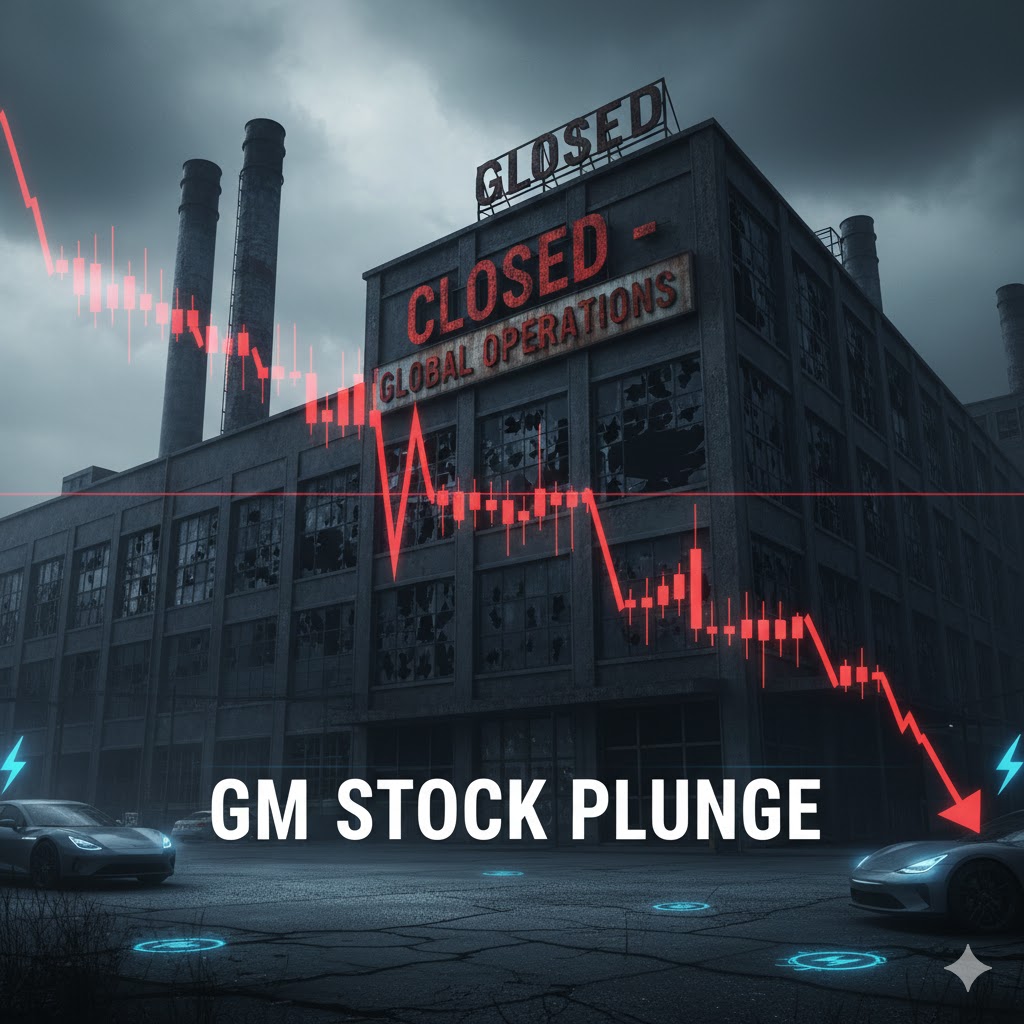
The Strategic Retreat: Consolidating the Fortress
The decision to shut down foreign factories is not a sudden whim but the culmination of a decade-long trend under CEO Mary Barra’s “Value over Volume” philosophy. General Motors has already exited major markets like Western Europe, Russia, and India, and has significantly scaled back operations in Australia and Southeast Asia. The latest round of closures, targeting underperforming assembly lines in South America and select components plants in the Asia-Pacific region, represents the final stages of GM’s transformation into a primarily North American-centric entity.
From a financial perspective, the logic is grounded in margin preservation. International operations, particularly in regions with high labor costs or volatile currencies, have frequently acted as a drag on GM’s consolidated EBIT (Earnings Before Interest and Taxes). In the 2025 fiscal year, while North American operations boasted adjusted EBIT margins of approximately 10.2%, the International division (GMI) struggled with margins closer to 3.5%, weighed down by pricing pressures and high structural costs. By shuttering these facilities, GM aims to eliminate hundreds of millions of dollars in annual fixed costs, potentially boosting the overall corporate margin by 50 to 80 basis points.
However, the cost of withdrawal is steep. Closing factories involves massive one-time restructuring charges, including severance packages, lease terminations, and asset write-downs. Analysts estimate that these most recent closures could result in pre-tax charges exceeding $2.5 billion over the next 18 months. For investors, the concern is that these “non-recurring” charges have become a recurring feature of GM’s financial narrative, clouding the underlying profitability of the business and complicating year-over-year comparisons.
The China Crisis: From Profit Engine to Liability
Perhaps the most alarming aspect of GM’s international retrenchment is its deteriorating position in China. For nearly two decades, China was GM’s “growth engine,” with its SAIC-GM and SAIC-GM-Wuling joint ventures contributing billions in equity income. However, the rapid rise of domestic Chinese EV giants like BYD, Li Auto, and Xiaomi has fundamentally broken the “legacy” model.
In late 2025, GM’s market share in China fell to an estimated 7.8%, down from over 14% just five years prior. The shift in consumer preference toward intelligent, software-defined EVs has left GM’s internal combustion engine (ICE) portfolio looking dated. Even as GM introduces its Ultium-based models to the Chinese market, it faces a brutal price war that has compressed margins to near-zero. The “General Motors Gm Us To Shut Down Foreign Factories” headline reflects a grim reality: if GM cannot compete profitably in the world’s largest car market, its global scale is effectively halved. The potential for a complete exit from Chinese manufacturing, once unthinkable, is now a topic of serious debate in boardroom meetings, leading to the “urge to sell” sentiment among investors who fear a total write-off of Chinese assets.
The EV Paradox: Heavy Spending vs. Uncertain Returns
At the heart of GM’s “North American Fortress” strategy is a massive bet on electrification. The company has committed $35 billion to EV and autonomous vehicle development through 2026. The goal is to produce 1 million EVs annually in North America by the end of this year. To achieve this, GM has converted several domestic plants, such as Factory ZERO in Detroit and Spring Hill in Tennessee, to dedicated EV production.
The financial strain of this transition is evident in GM’s cash flow statements. Capital expenditures (CapEx) for 2025 reached record highs of $11.5 billion, driven by the build-out of the Ultium Cells battery plants in partnership with LG Energy Solution. While these investments are essential for long-term survival, they are being funded by a legacy ICE business that is facing its own set of challenges, including rising labor costs following the 2023 UAW contract and slowing demand for high-margin pickup trucks.
Furthermore, the “EV transition” has proven to be more of a marathon than a sprint. While GM’s EV deliveries grew by 42% year-over-year in 2025, they still represent less than 15% of total volume. The profitability of these EVs remains elusive. Management has stated that they expect “positive variable profit” on EVs by late 2026, but true bottom-line profitability (including fixed costs and R&D) is likely years away. Investors who are “urged to sell” often point to this “valley of death”—a period where the company is spending billions on future tech while its current profit-making engine is being deliberately dismantled.
Cruise: The Autonomous Wildcard
General Motors’ valuation has long been tethered to the perceived success of Cruise, its autonomous driving subsidiary. Following a difficult period in 2024 marked by safety incidents and regulatory scrutiny, Cruise has attempted a “measured” comeback in 2025, relaunching supervised testing in several U.S. cities.
However, the financial burn at Cruise remains significant, exceeding $1.5 billion annually. While the long-term potential of a robotaxi network is enormous—ARK Invest and others project a multi-trillion dollar TAM—the path to commercialization is fraught with technical and legal hurdles. If GM continues to pull back from foreign markets to fund Cruise, it is effectively trading tangible manufacturing assets for speculative software assets. For many conservative investors, this shift in the risk profile of the company is a primary reason to exit the stock.
Competitive Dynamics and Market Share Erosion
In the North American market, GM’s primary stronghold, the competition is fiercer than ever. Ford (NYSE: F) has taken a different approach, maintaining a presence in international markets while splitting its business into “Blue” (ICE) and “Model e” (EV) divisions. Meanwhile, Tesla continues to exert downward pressure on EV pricing, and Hyundai-Kia is aggressively gaining share in the mid-market crossover segment.
GM’s decision to retire legendary nameplates or shift them exclusively to EV (like the Equinox and Blazer) carries the risk of alienating loyal customers who are not yet ready to make the electric switch. If GM’s domestic market share—currently around 16.5%—begins to slip alongside its international withdrawal, the company will face a “pincer movement” of declining volume and rising costs. The “scale” advantage that allowed GM to dominate the 20th century is rapidly evaporating.
Financial Health and Dividend Sustainability
Despite the challenges, GM’s balance sheet remains relatively robust. As of the end of Q3 2025, the company held approximately $24 billion in automotive liquidity. However, the debt levels associated with its GM Financial arm and the capital-intensive nature of battery manufacturing are growing.
The company’s dividend, currently yielding roughly 1.2%, is often viewed by investors as a sign of stability. However, in an environment where cash is needed for massive EV pivots and restructuring, the sustainability of dividend growth is questionable. Share buybacks, which totaled several billion in 2024-2025, have helped prop up Earnings Per Share (EPS), but some analysts argue that this capital would be better spent on accelerating technology development rather than financial engineering.
Summary of Key Risks and Financial Projections (2026 Focus):
| Metric | Status | 2026 Outlook |
| Consolidated EBIT Margin | 8.2% | Target 9%+ through factory closures and ICE efficiency. |
| EV Volume (N. America) | ~350k (2025) | Aiming for 1 million; high execution risk. |
| China Equity Income | Declining | Expecting near-zero or negative contribution as price wars persist. |
| CapEx Commitments | $11B+ | Remains high to fund Ultium and Cruise. |
| Market Share (US) | 16.5% | Vulnerable to Hyundai/Tesla and slower EV adoption. |
Conclusion: A Company at a Crossroads
The narrative of “General Motors Gm Us To Shut Down Foreign Factories Investors Urged To Sell Shares” is a stark reflection of the “Innovator’s Dilemma” in the automotive age. GM is attempting to do something incredibly difficult: dismantle a century-old global manufacturing footprint and replace it with a focused, high-tech, domestic EV powerhouse—all while maintaining the cash flow to satisfy Wall Street.
The strategic retreat from foreign markets is a logical response to a world where “global scale” is being replaced by “technological scale.” By shutting down low-margin overseas plants, GM is clearing the deck to focus on the battle for North America. However, the loss of international presence reduces the company’s ability to amortize R&D costs over a larger volume of vehicles, potentially making it a smaller, more niche player in the long run.
For investors, the decision to sell or hold depends on one’s belief in Mary Barra’s “Ultium” vision. If GM can successfully dominate the North American EV market and turn Cruise into a profitable service, the current restructuring will be seen as a brilliant tactical withdrawal. But if the EV transition continues to lose money and domestic market share plateaus, the “urge to sell” will only grow louder. General Motors is no longer the indestructible titan of old; it is a company fighting for its life in a rapidly shrinking world. The next 18 months will determine whether this retreat leads to a more profitable core or a permanent decline.
Leave a Reply