
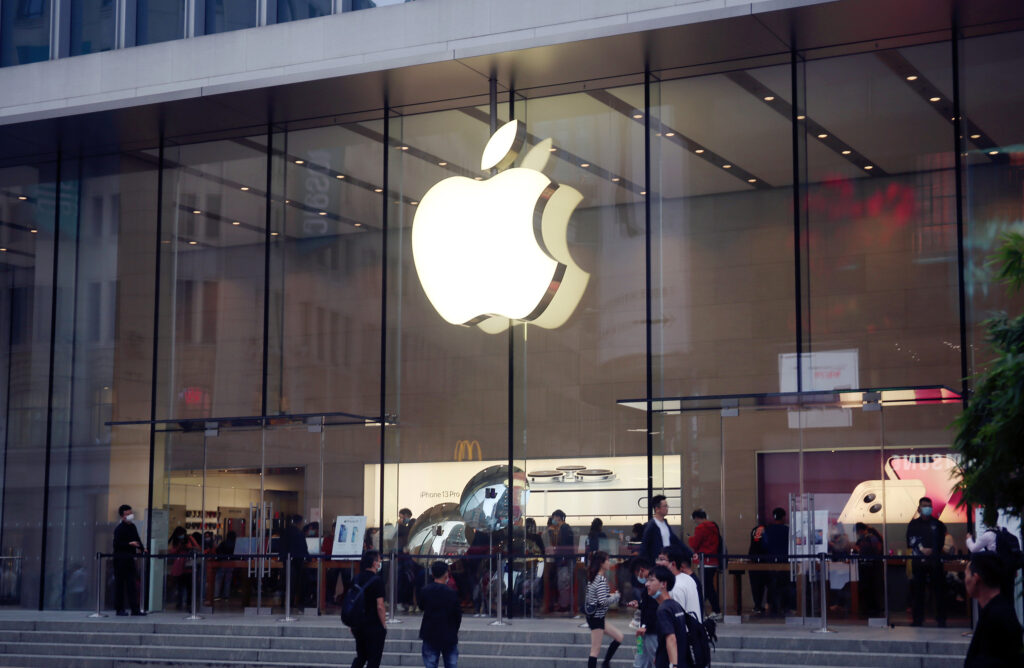


Apple’s shares are trading near the mid-$270s as the company pushes both product expansion and supply-chain diversification — two developments that matter to valuation. The market price I’m using for the analysis is the most recent close in mid-December 2025 (~$274.6).
What’s new and why it matters
Two recent reports are worth flagging. First, multiple outlets report Apple is in talks with Indian suppliers about moving more iPhone chip packaging and related manufacturing capacity into India as it diversifies supply beyond China — a multi-year, strategic shift that reduces single-country concentration risk and can improve geopolitical resilience for iPhone production. Second, The Information reports Apple intends to expand the iPhone family from five SKUs to seven by fall 2027 — a roadmap move that could lift unit ASPs, broaden market coverage and boost component demand (and services attachment) if executed well.
Both signals are constructive: India sourcing reduces a macro tail-risk, while a larger iPhone lineup increases optionality for revenue growth. But good strategic headlines do not automatically mean cheap stock — valuation and margin trajectory are the balancing forces.
The current fundamentals (selected figures)
- Trailing twelve-month revenue and recent quarterly results: Apple reported fiscal Q4 2025 revenue of $102.5 billion (quarter ended Sept. 27, 2025), with continuing strength in Services described as an all-time high for the quarter. These numbers show the business still generates very large, consistent cash flows.
- Size and valuation: Market capitalization sits roughly above $4 trillion and trailing P/E is ~36.7x (forward P/E ~33x); price-to-sales is near 9.8–10x. These are premium multiples — the market is paying for durable cash flows and growth in Services, wearables and software monetization.
- Dividend / shareholder returns: Apple continues returning capital to shareholders via dividends and repurchases (the company declared a $0.26/share dividend in late-2025), which cushions downside for yield-sensitive investors.
Simple numbers that matter (implied EPS and scenario math)
Because valuation talk is easiest when we translate price into earnings:
- Current price used: $274.61 (approx recent close).
- Trailing P/E ≈ 36.74x (market datapoint).
- Implied trailing-12-month EPS = Price / Trailing P/E = $274.61 / 36.74 = $7.47 EPS (TTM).
(calculation: 274.61 ÷ 36.74 = 7.4744 → round to $7.47)
Using that EPS base, here are three scenario outcomes over the next 12–18 months (simple arithmetic, illustrative — not a formal DCF):
- Bear case: EPS growth stalls (flat year), market demands cheaper multiple (PE → 30). Price = EPS * 30 = 7.47 * 30 = $224 → downside ≈ -18% from $274.6.
- Base case: EPS grows +10% (to $8.22) with multiple stable at ~33. Price = 8.22 * 33 = $271 → roughly flat to small downside (~-1%).
- Bull case: EPS grows +15% (to $8.59) and multiple expands to 38 (market re-rates for perceived durability), Price = 8.59 * 38 = $326 → upside ≈ +19%.
These scenarios show the stock’s near-term outcome is sensitive to both earnings momentum and whether the market keeps paying premium multiples for “safe growth.” (All arithmetic shown above is straightforward: multiply the EPS scenario by the assumed P/E.)
Why I lean toward a selective BUY
- Quality of earnings and cash generation. Apple’s size, gross margins on hardware plus high-margin Services, and massive free cash flow generation are structural advantages. The company reported $102.5B in the September quarter — strong absolute scale that funds R&D, capex, buybacks and dividends.
- Higher optionality from product and supply moves. A broader iPhone line (seven models by 2027) opens segmentation and pricing levers; India packaging/manufacturing moves reduce supply concentration risk — both are de-riskers and incremental growth drivers if Apple executes.
- Defensive characteristics with upside. Even if hardware cycles soften, Services and installed base monetization create earnings floor; shareholder returns provide a partial yield cushion. That combination often merits a premium multiple — provided growth continues.
Key risks that argue caution (why this is a selective buy, not a full-size backstop)
- High absolute valuation. Trailing P/E ~37x and price/sales ~10x price Apple into dependency on continued margin expansion and Services growth; any material hardware weakness or cross-cycle slowdown compresses multiples quickly.
- Competition & macro. Android OEMs continue feature convergence; macro downgrades (consumer belt-tightening) can hit premium upgrades.
- Execution risk on new SKUs and India ramp. New product complexity and moving key packaging to new geographies carry execution and timing risk; the market already prices perfection into mega-caps.
Practical recommendation & positioning
- For long-term, quality-bias investors: Buy on weakness or accumulate a position gradually (dollar-cost average) — Apple remains a core technology holding with structural advantages. Target a full position size only if the stock pulls back into the low-to-mid $240s (bear case zone) or if you are confident in a multi-year horizon where Services and AR/AI initiatives accelerate EPS.
- For short-term or valuation-sensitive investors: Consider hold or sell into strength. The stock can be fairly valued or slightly expensive against a no-growth hardware backdrop; use the scenario math above to calibrate risk tolerance.
- Risk management: Keep an eye on iPhone unit trends, Services growth rate (subscriptions / App Store), gross margin trajectory, and execution reports from India partners — these are the variables that most quickly change the EPS path and therefore the appropriate multiple.
What to watch next (events that should move the thesis)
- Next earnings release: compare Services growth and iPhone unit/ASP trends to consensus.
- Concrete supplier contracts or capacity targets in India (chip packaging announcements, Foxconn/Tata/other partner rollout timelines).
- Product roadmap confirmations (signals that the “7-model” plan is on schedule) and component supply commentary.
Bottom line: Apple is a high-quality company with tactical positives (India supply diversification, a broader iPhone lineup) that justify a selective buy for long-term investors who accept a premium multiple for durability and cash returns. That said, the share price already embeds elevated expectations; the upside requires continued EPS growth or multiple expansion. Use the scenario math above to size positions and guard against valuation compression.