Stock: MU

Micron Technology, Inc. (MU)

Micron Technology, Inc. (Nasdaq: MU) is a global leader in specialized memory and storage solutions, dedicated to providing high-performance DRAM and NAND flash memory for the worlds most advanced technologies. With a mission to be the most efficient and innovative global provider of semiconductor memory, it serves the specialized data center, mobile, and automotive markets. In the AI-heavy landscape of late 2025, Micron Technology, Inc. stock is regarded as the premier “AI Memory & HBM” play, following the record-breaking sell-out of its specialized “HBM3E” capacity for 2025 and 2026 and the successful launch of its specialized “HBM4” development program. The company’s focus on specialized “Advanced Node” manufacturing (1-beta DRAM and 232-layer NAND) provides it with a unique and high-margin competitive advantage in the AI hardware ecosystem.

Business operations in December 2025 are characterized by the record-breaking performance of its specialized “Data Center” segment—reporting a 50%+ year-over-year revenue surge—and the successful expansion of its specialized “U.S. Manufacturing” footprint in Idaho and New York. Those tracking MU stock have noted the company’s impressive 2025 revenue of approximately $37 billion and its success in achieving record-breaking quarterly net income. The company’s core products range from specialized high-bandwidth memory and SSDs to advanced mobile LPDDR5X and specialized automotive memory modules. The future business strategy involves a deeper push into “CXL-Based Memory Expansion” and the expansion of its specialized presence in the high-growth AI PC and AI Smartphone markets. Throughout 2025, Micron has demonstrated exceptional financial maturity, reporting significant growth in its high-margin HBM revenue.

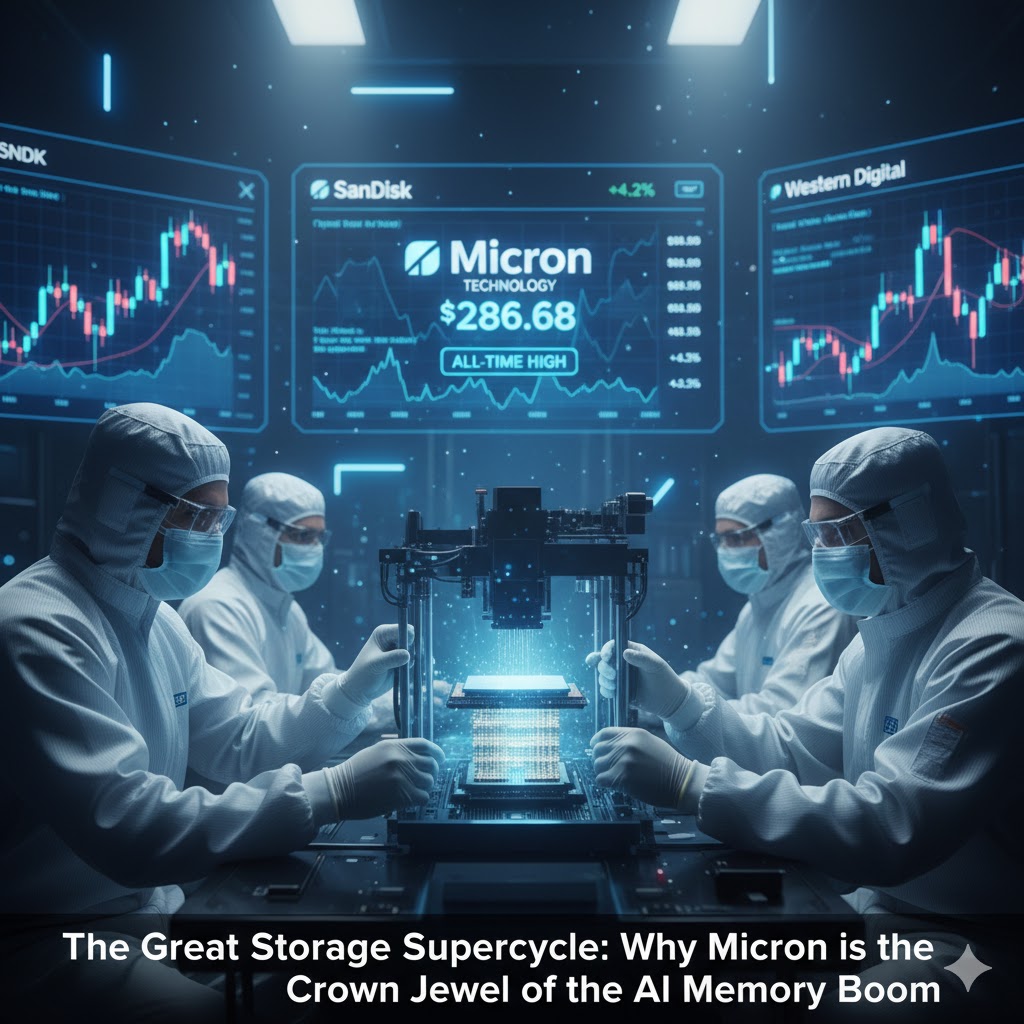
The MU stock price is currently trading near $265, reflecting the market’s excitement over its role as a primary beneficiary of the global “AI Super-Cycle.” Analysts monitoring the stock price highlight the company’s unrivaled role as a critical partner for Nvidia and the major cloud providers. For those analyzing the market today, the key catalysts include quarterly HBM shipment yields and the pricing trends in the specialized DRAM market. As a titan of the technology world, the company remains a top selection for growth-oriented semiconductor investors. The upward momentum of the stock price reflects its role as a master of memory innovation.

Related Articles

What the Top 20 Most Traded U.S. Stocks To Buy Reveal About a Market at a Turning Point

On December 13, 2025, U.S. equity markets delivered a clear but complex message: trading activity surged to extreme levels, yet price performance across many of the most liquid stocks diverged sharply. The list of the top 20 stocks by trading value was dominated by mega-cap technology names, particularly those linked to artificial intelligence, but the underlying tone suggested growing skepticism…

⚡️ The AI Memory Rush: Is Micron Technology (MU) Overvalued at its All-Time High, or is $300 the Next Stop?

Micron Technology, Inc. (MU), a global leader in memory and storage solutions, recently made headlines by surging to an all-time high of approximately $264.75 (as of the market close on December 10, 2025), reflecting a staggering year-to-date return of nearly $200\%$. The stock is riding a historic wave of demand driven by the explosive growth of Artificial Intelligence (AI). The…

Recent Articles

Truth, Fusion, or Fiction? Why Trump Media’s $6 Billion Pivot Raises Questions About Valuation and DJT Stock

In a dramatic strategic shift that has reignited interest in one of the most controversial public stocks of the past few years, Trump Media & Technology Group (Nasdaq: DJT) has agreed to merge with nuclear fusion company TAE Technologies in an all-stock transaction valuing the combined enterprise at over $6 billion. This deal — and the $90 million termination fee…

Micron’s AI Gold Rush: A Deep Dive Into the Blowout Quarter — Can Supply Discipline and HBM Strategy Cement a Multi-Year Upside?

Micron Technology’s fiscal Q1 2026 print and, more importantly, its guidance represent a fundamental re-pricing event for the company. Management reported record quarterly revenue and margins, then guided the next quarter to $18.3–$19.1 billion in revenue with adj. EPS guidance roughly $8.22–$8.62, well above consensus; Micron also announced a meaningful increase in FY2026 capital spending to support HBM and 1-gamma…

  • Micron (MU): Riding the HBM Tsunami — Can Memory’s Supercycle Fuel Durable Profits?

    Micron opened the overnight session with a fresh gust of optimism as investors reacted to an accelerating memory upcycle that industry participants now describe in almost mythic terms: high-bandwidth memory shortages, explosive HBM demand driven by AI compute, and price increases that have outpaced traditional safe havens like gold. The recent surge in DRAM and HBM prices has been dramatic — inventory drawdowns after coordinated reductions in wafer starts, combined with an unprecedented build-out of AI models and data-center capacity, have created a supply shock that benefits producers with scale and fabrication flexibility. Micron, as one of the few vertically integrated memory suppliers with both DRAM and NAND footprints, is squarely in the crosshairs of that profit opportunity.

    Behind the headline numbers lies a structural story. The memory market’s supply cuts beginning in 2023 left inventories thin after years of oversupply. Meanwhile, demand drivers shifted from incremental consumer refresh cycles to a once-in-a-generation AI compute boom. HBM — the high-performance, 3D-stacked memory architects use to feed modern GPUs and accelerators — is not a commodity DRAM replacement; it is a premium product with serious engineering and packaging constraints. When top AI adopters place orders, they are buying into a constrained channel where lead times are long and capacity cannot be turned on overnight. That combination of tight supply and urgent enterprise demand has turned HBM into the market’s most valuable commodity, and Micron’s access to packaging and advanced nodes provides an asymmetric advantage.

    Micron’s commercial momentum is visible across multiple vectors. Large orders from cloud providers and AI infrastructure vendors have been reported, and the company’s roadmap for HBM3 and HBM3E technologies positions it to capture higher ASPs (average selling prices) and favorable gross margins. These products are directly complementary to next-generation GPUs deployed by major hyperscalers, research labs, and private AI initiatives that require terabytes-per-second bandwidth. As AI workloads migrate from experimental clusters to production-scale deployments, customers cannot compromise on memory performance; that creates a pricing environment far more forgiving than typical DRAM commodity cycles.

    Financially, the implications are significant. Higher DRAM and HBM prices translate into rapid top-line expansion for leading memory makers, while margin recovery flows through as fixed-cost absorption improves. For Micron, that could mean a swift improvement in operating leverage — even as the company continues to invest heavily in R&D and capacity. Analysts revising forecasts upward would not be surprising given the size of the demand shock; upward revisions tend to accelerate momentum on sentiment and multiple expansion. Yet investors must distinguish between cyclical gains and secular improvements. The critical question is whether Micron can convert a price-driven windfall into durable profitability by capturing market share, sustaining ASPs, and iterating on advanced packaging capabilities.

    There are, of course, countervailing risks. HBM production is capital intensive and subject to long lead times; new fabs and packaging lines take years to come online. If a new entrant or incumbent accelerates capacity too quickly, the oversupply pendulum could swing back — and historical memory cycles are notoriously ruthless. Geopolitical tensions and export controls also complicate the mix: memory supply chains are global, and policy shifts could disrupt shipments, customer access, or pricing elasticity in key markets. Furthermore, Micron’s own capital allocation and discipline will be tested as opportunities to invest in capacity proliferate; mis-timed expansion could force the company into a classic cycle of boom-and-bust.

    From an investment perspective, Micron offers a compelling, but nuanced, long thesis. The bull case rests on three pillars: first, structural demand for HBM and DRAM driven by AI and data-center expansion; second, constrained supply and high switching costs for premium memory that support elevated pricing; third, Micron’s technical competence and manufacturing footprint that enable it to capture a meaningful share of high-margin HBM sales. For investors convinced that the HBM supercycle has legs and that Micron can execute on advanced-node packaging, the upside could be material as revenue and margins re-rate.

    Yet prudent investors should build hedges into any position. Protective options, staged entry points, and attention to inventory and ASP trends are essential. Watch indicators such as reported ASPs for HBM, upstream wafer starts, Micron’s inventory days, and large OEM contract announcements — these will be the real-time levers that confirm whether the rally is sustainable. Short-term traders may find momentum trades attractive, but those seeking durable returns should focus on execution risk, capital discipline, and potential policy shocks that could blunt the rally.

    In the near term, Micron looks like the prime beneficiary of a market where memory is no longer a passive commodity but a vital enabler of an AI-driven economy. If the company converts this cyclical spike into structural advantage, investors who allocate thoughtfully here could be rewarded handsomely. If, however, supply catches up too quickly or demand proves less sticky, the volatility that defines the memory business could return with force. For now, Micron sits at the eye of the storm — presenting both one of the most exciting opportunities and one of the clearest risks in today’s semiconductor landscape.