On Wednesday, February 11 local time, Meta(META) announced that, as part of its large-scale artificial intelligence (AI) infrastructure expansion plan, the company has begun construction on a new data center.
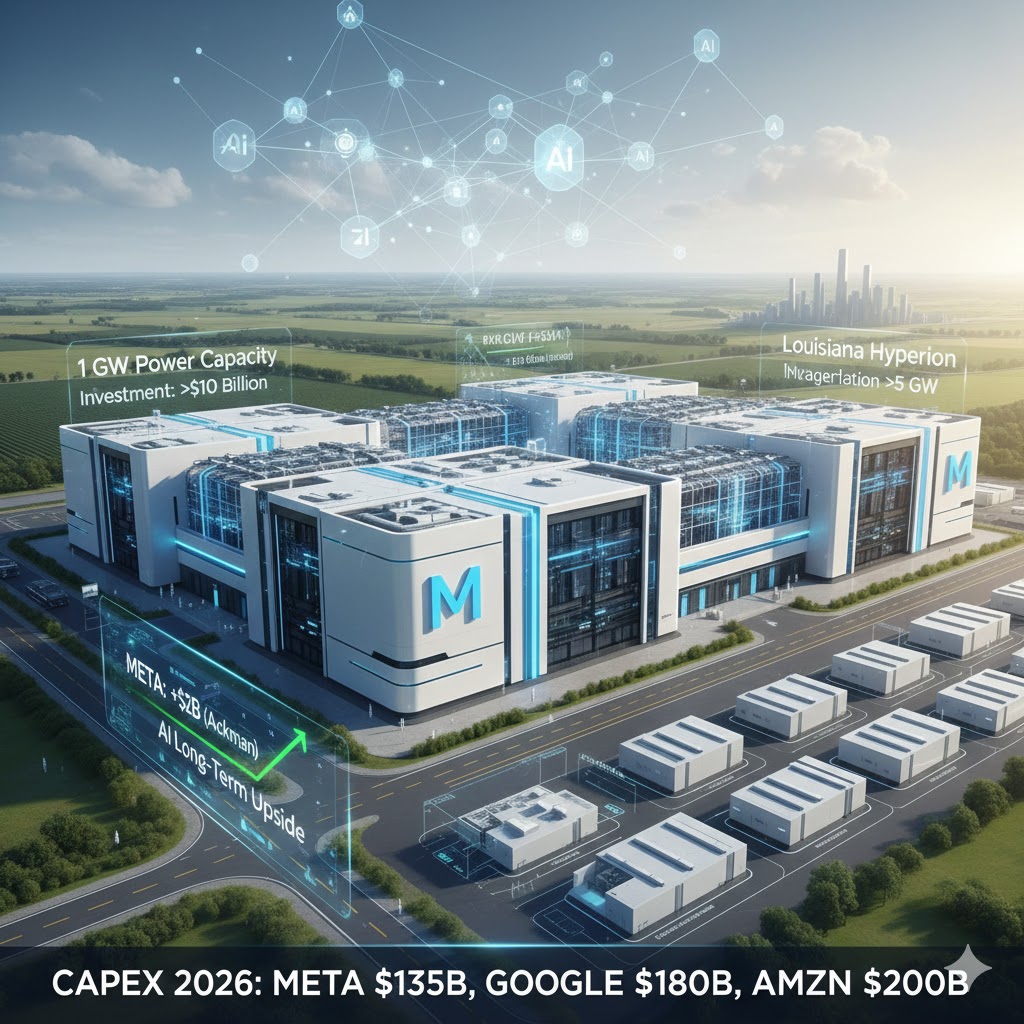
The facility, with an investment exceeding $10 billion, will be located in Lebanon, Indiana, and will have a capacity of more than 1 gigawatt. This level of power capacity is enough to supply electricity to hundreds of thousands of U.S. households.
The term “Lebanon” primarily refers to the West Asian country of Lebanon. However, multiple U.S. states also have cities named Lebanon.
Meta stated that the data center will support both its AI-related workloads and its core product operations, making it one of the largest infrastructure projects in the company’s history.
As the AI arms race intensifies, tech giants are aggressively building data centers. However, the surge in AI infrastructure development has increasingly drawn criticism from nearby communities. Concerns include rising utility costs and noise generated by cooling systems.
In response, Meta said it will cover the full cost of electricity used by the data center and will donate $1 million annually for the next 20 years to the Boone REMC community foundation to help residents pay their energy bills, as well as provide funding for emergency water assistance. The data center will also use a closed-loop water system, which Meta said “requires no water for most of the year.”
Additionally, Meta announced it will invest more than $120 million in water infrastructure improvements in Lebanon, along with upgrades to roads, transmission lines, and local utilities.
Meta’s AI ambitions extend beyond a single 1-gigawatt facility. In July last year, Meta CEO Mark Zuckerberg said the company would build a massive Hyperion facility in Louisiana, describing the data center as large enough to cover a significant portion of Manhattan, with ultimate capacity expected to exceed 5 gigawatts.
Last week, when reporting earnings, Meta said it plans to invest up to $135 billion in AI infrastructure in 2026. By comparison, Meta’s capital expenditures in 2025 totaled $72.2 billion.
Meta is not the only tech company ramping up AI infrastructure spending this year. Google said in its earnings report that it plans to spend $180 billion in 2026. Amazon(AMZN) is expected to spend as much as $200 billion this year.
Amid the sharp increase in capital expenditures, shares of Microsoft, Google, and Amazon all fell significantly following their earnings releases. Although Meta’s stock was initially boosted by better-than-expected earnings, it later retreated alongside its tech peers.
However, on Wednesday, Bill Ackman’s hedge fund Pershing Square disclosed that it has built a substantial position in Meta.
Pershing Square is reported to hold $2 billion worth of Meta shares, with an average purchase price of $625 per share.
In its annual investor letter, the fund stated: “We believe Meta’s current share price undervalues the company’s long-term upside potential in artificial intelligence. For one of the world’s greatest businesses, the valuation is significantly discounted.”