A short viral clip out of Austin — showing a Model Y on a public road apparently operating with no in-car safety monitor and no other occupants, and a near-cheerful confirmation from Tesla’s Autopilot lead — pushed Tesla headlines and helped lift the stock into a fresh technical run last week. But headline drama isn’t the same thing as durable economics. When you strip out the Musk-era narrative premium, the arithmetic behind Tesla’s share price looks stretched: the company is trading like a dominant, diversified AI / software-as-a-service winner while still delivering margins and profits that, so far, remain fundamentally auto-industry scale. That gap is the core reason our recommendation here is Sell / Reduce exposure for investors who own the name at current levels.
Snapshot — the numbers you need
- Latest reference price (mid-December 2025): ~$459 per share (recent closes around $458.96).
- Market capitalization: ~$1.5–1.53 trillion, putting Tesla in the top ten largest global companies by market cap.
- Trailing P/E and forward metrics: extremely elevated — trailing P/E in the hundreds (reported trailing P/E ~300+), forward multiples likewise very rich, reflecting high growth premium already priced in.
- Q3 2025 operating context: Tesla reported record deliveries in Q3 but modest GAAP net income (around $1.4B GAAP net income in Q3) and continuing pressure on per-vehicle margin narratives.
Why the market has been willing to pay up
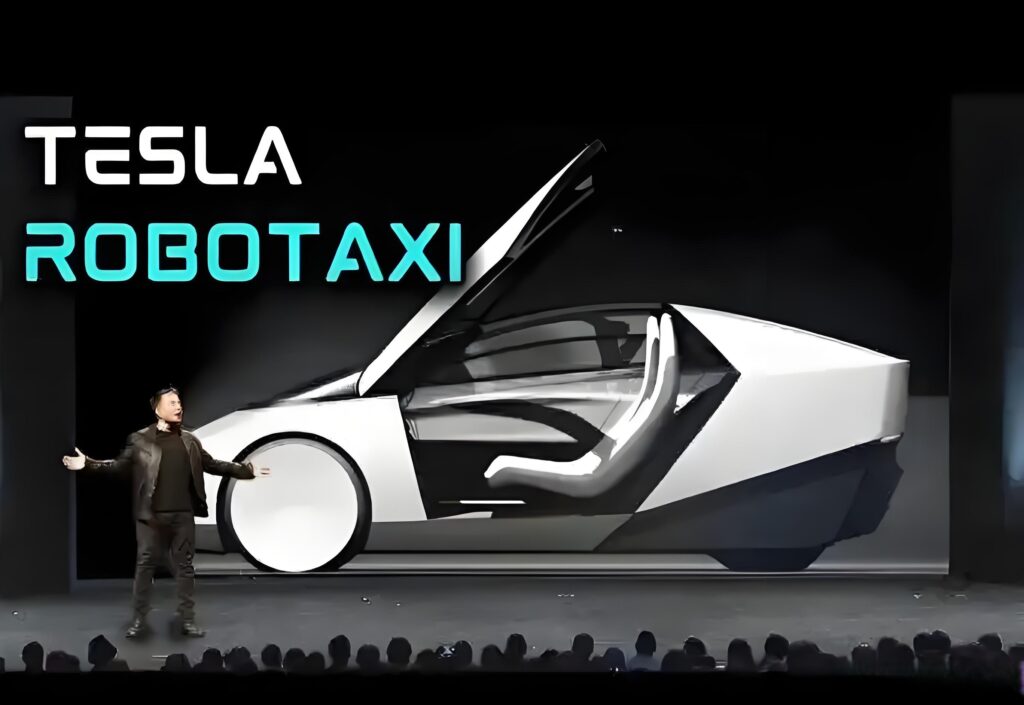
Investors are buying a long-dated optionality package: (1) an enormous software / FSD-based mobility business (robotaxis), (2) recurring revenue from software and fleet services, (3) energy storage & solar optionality, and (4) a potential second act in robotics (Optimus). Those futures justify premium valuations if execution is rapid and regulatory & safety risks are manageable. Musk’s repeated timelines (robotaxis by year-end in certain cities) have repeatedly catalyzed runs in the share price, and any visible sign of field trials — even a viral clip of a car without a cabin safety monitor — is treated as validation by momentum traders.
The uncomfortable truth under the hood
- Valuation vs. cash-flow reality. A ~$1.5T market cap implies extraordinary future cash flows from software/robotaxi and robotics. Yet near-term free cash flow and GAAP earnings remain modest relative to that price. Trailing P/E ratios in the hundreds mean even small misses in growth, margin, or adoption lead to outsized downside.
- Analyst skepticism is rising. High-profile downgrades and the re-rating of coverage teams are signaling the market is beginning to push back on bull assumptions: Morgan Stanley recently moved from Buy/Overweight to Hold/Equal Weight on valuation and demand concerns while trimming volume forecasts. That’s not proof of collapse — but it is a warning sign that consensus now sees smaller upside from here.
- Execution / regulatory risk on the self-driving promise. Public field tests without safety monitors raise regulatory scrutiny and liability risk. Even if the video in Austin proves to be a controlled test with remote supervision, the optics — plus historical incidents and regulatory probes of Autopilot / FSD — increase the chance regulators impose stricter conditions that would slow commercial rollout. The risk is not only fines; it’s potentially delayed revenue recognition from robotaxi services.
- Automotive cyclicality and demand softness. EV demand is increasingly competitive globally. If global EV growth slows or Tesla’s mix/volume underperforms the elevated expectations baked into the stock, the multiple contracts quickly. Q3 results show Tesla still generating profit, but not at a scale commensurate with a trillion-plus valuation absent major new revenue lines accelerating soon.
Bull case — why some still own TSLA
- If Tesla truly executes a profitable, regulation-compliant robotaxi fleet and scales FSD subscription/fleet revenue fast, TAM expansion could justify current multiples or higher.
- Energy and Optimus robot initiatives could create additional high-margin revenue streams over the longer term.
- Brand, charging network, and integrated hardware/software stack are durable competitive assets — hard to build overnight.
But bulls are asking investors to believe multiple major assumptions will happen quickly and smoothly: flawless autonomous performance, permissive regulators, rapid consumer and fleet adoption, and significant margin upside from software — all while competition from legacy automakers and China intensifies.
Catalysts to watch (what would move the stock materially)
- Positive catalysts: verifiable, audited pilot of unattended robotaxi operations with strong safety data; rapid growth in FSD subscription revenue and margin expansion; major upside in Optimus adoption or energy revenue.
- Negative catalysts: adverse regulatory action tied to unsupervised field tests; disappointing delivery or margin guidance; analyst downgrades becoming consensus; slower uptake of FSD subscriptions. The recent Morgan Stanley downgrade is an early sign of shifting analyst sentiment.
Valuation scenarios — simplified
- Bear scenario: No material robotaxi revenue; EV margins compress; valuation multiple retreats toward traditional auto multiples (EV/earnings multiples far lower). Downside in this scenario could be 30–60% from current levels depending on multiple contraction speed.
- Base case: Gradual software monetization, steady vehicle deliveries, limited robotaxi rollouts — valuation compresses modestly as growth expectations normalize; modest downside or sideways trading.
- Bull case: Rapid, regulation-friendly robotaxi rollout and robust recurring software revenue — upside remains possible but requires multiple catalysts to materialize and be validated by audited, repeatable metrics.
Recommendation — Sell / Reduce (practical guidance)
- For long-term holders who bought below $200–$300: consider trimming to lock in gains and free capital for diversified exposures. Holding a smaller core position for optionality could be reasonable, but rebalance risk.
- For new investors or those with material exposure (>3–5% portfolio): avoid initiating new long positions at current prices; wait for either a meaningful re-rating through evidence of safe, repeatable robotaxi economics or a correction that brings valuation closer to fundamentals.
- For traders/speculators: volatility will remain high around product/regulatory news. Use strict risk controls and be prepared for quick reversals when narratives change.
Final take
Tesla remains one of the most fascinating and polarizing investment stories of the decade: a hardware company masquerading as a high-growth AI/software platform. The difference between a multi-trillion valuation and a far lower one depends less on dreams and more on measurable, repeatable cash flows from software and robotaxi services — with regulators and safety outcomes as gatekeepers. Given the present evidence — a viral Austin video, upbeat internal social posts, very rich multiples, and rising analyst caution — the prudent stance is to sell or reduce until the company can demonstrate that the high-margin, high-scale software revenues investors expect are real, recurring, and regulatory-resilient.