The narrative surrounding Tesla, Inc. (NASDAQ:TSLA) in early 2026 has become a fascinating case study in market psychology and institutional resilience. Despite a series of high-profile legal challenges and a contraction in core automotive deliveries throughout the previous fiscal year, the company’s market capitalization has staged a remarkable recovery, hovering around the $1.5 trillion mark as of January 2026. This surge suggests that the investment community has largely decoupled Tesla’s valuation from its immediate quarterly delivery metrics, choosing instead to focus on the long-term potential of its artificial intelligence (AI) ecosystem, autonomous driving software, and rapidly expanding energy storage business. For institutional players like BlackRock, Inc. (NYSE:BLK) and State Street Corporation (NYSE:STT), the “bull case” for Tesla is increasingly defined by its transformation from a high-volume car manufacturer into a vertically integrated robotics and energy conglomerate.
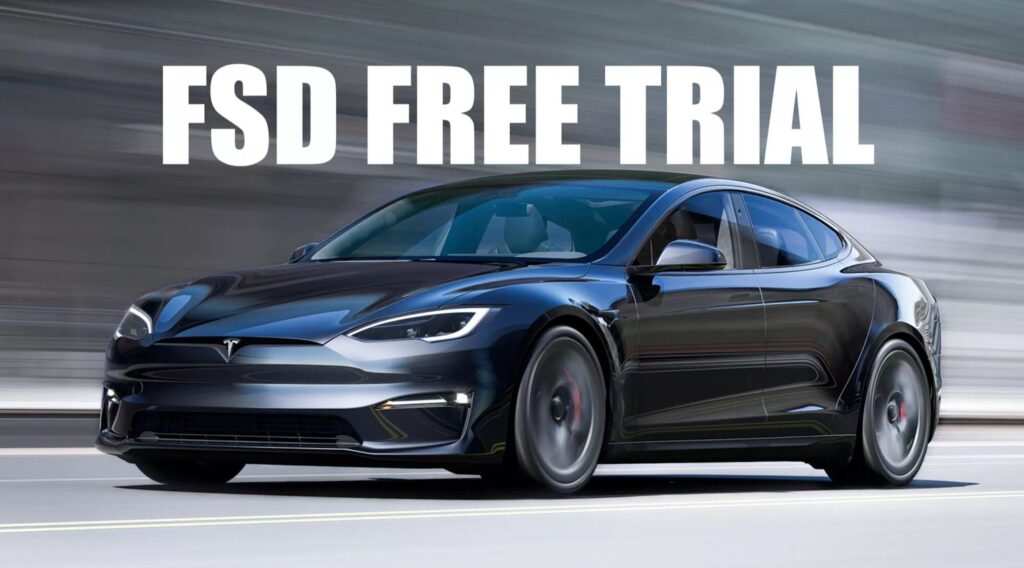
The most recent legal friction arrived in late December 2025, when a California administrative law judge issued a ruling that momentarily threatened to suspend Tesla’s licenses to produce and sell vehicles within its most critical domestic market. The dispute centered on the company’s marketing of its “Autopilot” and “Full Self-Driving” (FSD) features, with regulators alleging that the terminology misled consumers regarding the level of driver intervention required. While such a setback would typically send shares of a traditional automaker like Ford Motor Company (NYSE:F) or General Motors Company (NYSE:GM) into a tailspin, Tesla’s stock responded with surprising buoyancy. The market appeared to agree with analysts at Morningstar, Inc. (NASDAQ:MORN) who predicted that Tesla would likely adjust its marketing messaging or reach a settlement long before any actual production halt at its Fremont factory occurred.
Financial Performance and the Energy Growth Engine
A deep dive into Tesla’s financial reports for the 2025 fiscal year reveals a complex picture of “stagnation in the hardware” versus “revolution in the infrastructure.” For the full year 2025, Tesla (NASDAQ:TSLA) delivered approximately 1.636 million vehicles, marking an 8.6% decline from the 1.789 million units delivered in 2024. This second consecutive year of volume contraction reflects a saturated EV market and intensified competition from Chinese rivals like BYD Co. Ltd. (OTC:BYDDF), which officially surpassed Tesla as the global leader in battery-electric vehicle (BEV) production in 2025. Despite this, Tesla’s revenue for the third quarter of 2025 hit $28.1 billion, a 12% year-over-year increase that exceeded consensus estimates of $26.4 billion.
The primary driver of this revenue growth, and a key reason for the current investor optimism, is the Tesla Energy division. In the fourth quarter of 2025, Tesla deployed a record 14.2 gigawatt-hours (GWh) of energy storage products, bringing the full-year total to 46.7 GWh. This segment, which produces the Megapack and Powerwall systems, is growing at a much faster rate than the automotive business and carries significantly higher margins. As global utility companies like NextEra Energy, Inc. (NYSE:NEE) and Duke Energy Corporation (NYSE:DUK) accelerate their transition to renewable grids, Tesla’s “battery-first” strategy is providing a diversified revenue stream that cushions the impact of slowing car sales. This shift is particularly attractive to long-term funds managed by The Vanguard Group, which prioritize companies with sustainable, recurring cash flows from critical infrastructure.
The AI Pivot and the $2 Trillion Vision
The “soaring” stock price in early 2026 is also a reflection of the market’s belief in Tesla’s “AI Supercycle.” In late 2025, CEO Elon Musk announced that the company would begin mass production of its “Cybercab” robotaxi in 2026, with a target output of at least two million units. This announcement, coupled with the rollout of FSD v13, has shifted the investor focus toward software-as-a-service (SaaS) multiples. Dan Ives of Wedbush Securities has argued that the real value of Tesla (NASDAQ:TSLA) lies in its autonomous driving fleet, which could eventually generate hundreds of billions in high-margin licensing and subscription revenue. This vision is supported by Tesla’s continued investment in its Dojo supercomputer and its partnership with NVIDIA Corporation (NASDAQ:NVDA) to secure the H100 and Blackwell-series GPUs necessary for training its end-to-end neural networks.
Operational costs have risen significantly as a result of this AI pivot. Operating expenses for the third quarter of 2025 surged 50% year-over-year to $3.43 billion, primarily due to increased R&D spending and the build-out of the “unboxed” manufacturing lines at Gigafactory Texas. While this has compressed the operating margin to roughly 5.8%—a sharp decline from the double-digit margins seen in 2022—investors have largely looked past these short-term pressures. The general consensus among “bull” analysts is that the capital expenditure of today is the foundation for a “General Purpose Robotics” company that will eventually include the Optimus humanoid robot. This optimism is shared by ARK Investment Management, led by Cathie Wood, whose funds like the ARK Innovation ETF (NYSE:ARKK) maintain Tesla as a top holding based on its potential to dominate the autonomous transport market by 2030.
Regional Dynamics and Market Share Shifts
Geopolitically, Tesla (NASDAQ:TSLA) faces a more fragmented landscape in 2026. In Europe, the company has seen its market share eroded by domestic incumbents like Volkswagen AG (OTC:VWAGY) and the influx of affordable Chinese models from brands like MG, owned by SAIC Motor. From January to November 2025, new Tesla registrations in the European Union plunged by 28%, even as the broader EV market grew by 27%. This discrepancy is partly attributed to the expiration of various green subsidies in Germany and France, and partly to the “brand fatigue” associated with the aging Model 3 and Model Y platforms. To counter this, Tesla is expected to launch a more affordable, sub-$25,000 model (often referred to as the “Model 2”) in the first half of 2026, which is crucial for reclaiming the entry-level segment from competitors like Stellantis N.V. (NYSE:STLA).
In China, the world’s largest EV market, the battle for supremacy has become even more cutthroat. Tesla’s Shanghai plant, while remaining its most efficient export hub, saw shipments decline year-over-year for much of 2025 as consumers flocked to high-tech, hybrid, and battery-swapping offerings from NIO Inc. (NYSE:NIO) and Li Auto Inc. (NASDAQ:LI). However, the recent approval for Tesla to pilot its FSD software in certain Chinese cities has provided a fresh catalyst for the stock. If Tesla (NASDAQ:TSLA) can successfully localize its autonomous software in China, it would create a technological moat that its domestic rivals might struggle to replicate without similar global data-training footprints.
Legal Resilience and Corporate Governance
On the governance front, the recent reinstatement of Elon Musk’s 2018 pay package by the Delaware Supreme Court in late 2025 removed a significant cloud of uncertainty. Investors had feared that a finalized rejection of the compensation plan could lead to Musk’s departure or a reduction in his focus on Tesla in favor of his other ventures, such as SpaceX or xAI. With the pay package resolved, the board of directors—which recently added several independent members to satisfy institutional demands from groups like CalPERS (California Public Employees’ Retirement System)—is now focused on the 2026 product roadmap. The stability of the leadership team is a prerequisite for the aggressive scaling of the Cybertruck, which, despite early production hurdles, began contributing to positive gross margins in the final quarter of 2025.
The resilience of Tesla’s stock despite the “significant leak incident” and regulatory probes into FSD safety suggests that the “Tesla premium” is more durable than many skeptics predicted. Market participants appear to be pricing in a “survival of the fittest” scenario for the EV industry. As interest rates begin to stabilize in early 2026, smaller, less-capitalized players like Rivian Automotive, Inc. (NASDAQ:RIVN) and Lucid Group, Inc. (NASDAQ:LCID) are facing increased pressure to reach profitability, whereas Tesla’s $160 billion-plus cash pile allows it to continue investing through the downturn. This cash-rich position enables the company to fund its own “internal venture capital” arm, exploring solid-state battery technology and decentralized energy trading platforms.
Conclusion: A Pivotal Year of Transition
Looking ahead to the remainder of 2026, Tesla (NASDAQ:TSLA) stands at the threshold of a new era. The “legal setbacks” that once seemed capable of derailing the company are now viewed by the market as secondary to the progress of its software and energy divisions. The 30% surge in stock price from its mid-2025 lows indicates that the investor base has been “cleansed” of short-term traders, replaced by institutional bulls who are betting on the “AI-ification” of global industry. While the core automotive business may see “bumpy quarters” through the middle of the year, the record energy deployments and the looming launch of the Robotaxi network provide a powerful narrative for sustained growth.
The financial data for Q4 2025 and the upcoming Q1 2026 guidance will be the next major tests for this bullish sentiment. If Tesla can demonstrate that its automotive margins have bottomed out while its energy and services revenue continues to grow at double-digit rates, the path to a $2 trillion valuation will be clearly paved. For the modern investor, Tesla is no longer a car company; it is an index for the future of autonomy, robotics, and distributed energy. Despite the headlines of legal turmoil, the underlying fundamentals of its technology stack and its strategic dominance in the global energy transition remain the primary anchors for its soaring valuation.