Tag: MSFT

  • Microsoft MSFT Rises 1.44 Expanding AI Efforts To Ensure Transparency And Safety

    The dawn of 2026 has brought with it a renewed focus on the delicate balance between technological acceleration and institutional accountability. In early January, shares of Microsoft Corporation (NASDAQ:MSFT) experienced a notable uptick, rising 1.44% in a single trading session following the company’s strategic announcement regarding the expansion of its “Responsible AI” framework. This movement is not merely a reaction to a daily price fluctuation but a reflection of a broader market consensus: that the long-term winners of the artificial intelligence era will be those who can provide “trust as a service.” By deepening its commitment to transparency and safety—ranging from advanced “red-teaming” of its large language models to the integration of decentralized identity protocols—Microsoft is positioning itself as the indispensable partner for global enterprises navigating an increasingly complex regulatory and ethical landscape.

    For institutional investors, the 1.44% gain is a technical signal of confidence in Microsoft’s (NASDAQ:MSFT) 2026 fiscal roadmap. As the company approaches its fiscal second-quarter earnings release on January 28, the focus has shifted from raw “Copilot” adoption numbers to the quality and durability of its AI-driven revenue streams. The market is beginning to price in the “Safety Premium”—a valuation boost awarded to platforms that mitigate the risks of “hallucinations,” data leakage, and algorithmic bias. With Microsoft’s commercial remaining performance obligations (RPO) reaching a staggering $392 billion in late 2025, the ability to ensure that these obligations are fulfilled within a secure and transparent environment is the primary driver of its current stock performance.

    The Transparency Initiative: Azure AI Foundry and Beyond

    The core of Microsoft’s (NASDAQ:MSFT) January announcement centers on the expansion of “Azure AI Foundry,” an enterprise-grade hub designed to give developers granular control over the transparency and safety of their AI agents. In 2026, the definition of transparency has evolved from simply providing “system prompts” to offering “traceable reasoning.” Through its new “Transparency Notes” v3.0, Microsoft now provides real-time telemetry on how its models, including the latest iterations of GPT-4o and its custom “Majorana” quantum-hybrid models, process specific queries.

    This level of disclosure is particularly critical for clients in highly regulated sectors such as healthcare and finance. For instance, a major global bank like HSBC Holdings plc (NYSE:HSBC) or a pharmaceutical giant like Pfizer Inc. (NYSE:PFE) cannot deploy AI agents that operate as “black boxes.” By providing a modular architecture where every decision-making step of an AI agent can be audited and logged, Microsoft is effectively lowering the “barrier to deployment” for billion-dollar organizations. Analysts from firms like Wedbush Securities have noted that this “auditable AI” is the missing link that will allow Fortune 500 companies to move from experimental “pilot phases” to full-scale “production workloads” in 2026.

    Safety as a Revenue Driver: The Rise of Agentic Security

    The 1.44% rise in MSFT shares also coincides with the launch of “Microsoft Defender for AI Agents,” a sophisticated security layer designed to prevent “prompt injection” and “data poisoning” attacks. As we enter 2026, the threat landscape has shifted; hackers are no longer just attacking databases, they are attacking the logic of AI models. Microsoft (NASDAQ:MSFT) has responded by treating “AI Safety” not as a philanthropic endeavor, but as a core product feature within its Intelligent Cloud segment.

    During the first week of January, Microsoft revealed that its AI-powered security tools, integrated with the “Security Copilot” agent, now protect over 1.2 million organizations worldwide. The revenue implications are significant: by bundling advanced safety features into higher-tier Microsoft 365 and Azure subscriptions, the company has successfully justified its upcoming July 2026 price increases. This “value-added” approach to safety ensures that as companies spend more on AI, they also spend more on the Microsoft security ecosystem, creating a powerful “flywheel” effect that bolsters the company’s operating margins, which hovered near 44% in the previous quarter.

    Financial Resilience and the AI Capital Expenditure Wall

    While the focus on safety provides a competitive moat, Microsoft (NASDAQ:MSFT) continues to face scrutiny regarding its massive capital expenditure (CapEx) on AI infrastructure. In the 2025 fiscal year, the company’s CapEx surged to over $50 billion, a figure that rivals the entire GDP of some nations. Critics have questioned whether the return on investment (ROI) can justify such an “AI arms race” against competitors like Amazon.com, Inc. (NASDAQ:AMZN) and Alphabet Inc. (NASDAQ:GOOGL).

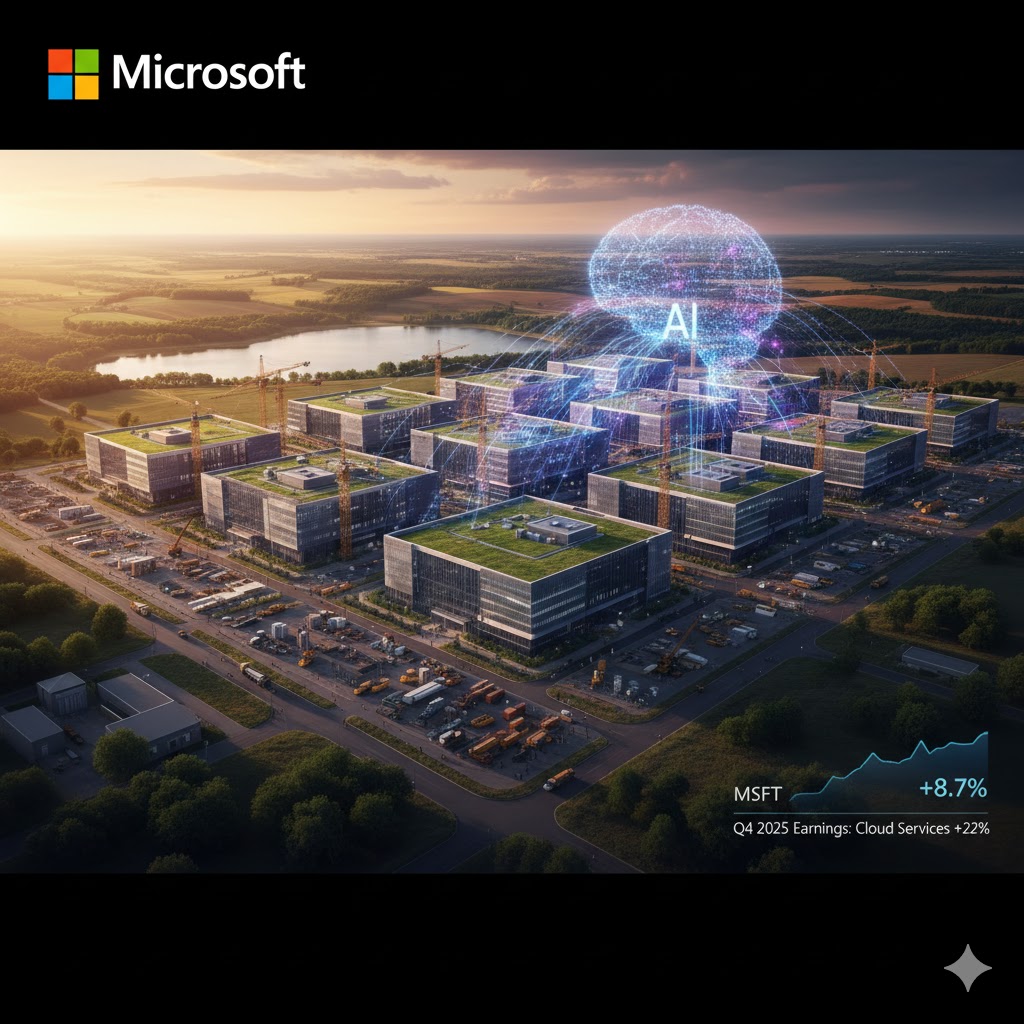
    However, the 1.44% gain suggests that the market is currently siding with CEO Satya Nadella’s “platform-first” philosophy. Unlike pure-play AI startups, Microsoft possesses a diversified revenue stream—spanning gaming via Activision Blizzard, social networking via LinkedIn, and enterprise software—that provides a massive “cash cushion” to fund these long-term builds. For the quarter ending September 2025, Microsoft generated $45.1 billion in operating cash flow, ending the year with over $102 billion in cash and short-term investments. This financial fortress allows Microsoft (NASDAQ:MSFT) to build out “AI superfactories” while simultaneously funding the rigorous, and often expensive, safety testing required to maintain its “Responsible AI” reputation.

    Strategic Milestones: The Shift from Tools to Teammates

    Looking deeper into the “Expanding AI Efforts” mentioned in the announcement, Microsoft (NASDAQ:MSFT) is leading the transition from “Assistive AI” (chatbots) to “Agentic AI” (autonomous partners). In 2026, AI is no longer just summarizing emails; it is autonomously managing supply chains and conducting research in materials science. To ensure these “teammates” are safe, Microsoft has implemented a “Distributed Governance” model where AI agents are assigned unique digital identities, similar to human employees.

    This move toward “Identity-based AI Safety” is a significant technical milestone. By requiring AI agents to authenticate via “Microsoft Entra” before accessing sensitive corporate data, the company is effectively preventing the “unauthorized autonomy” that has long been a concern of AI ethics boards. For a hardware leader like NVIDIA Corporation (NASDAQ:NVDA), which provides the raw compute power for these agents, Microsoft’s safety software layer acts as the “operating system” that makes the hardware usable and safe for enterprise consumption. This symbiosis ensures that the “AI boom” remains a structural shift rather than a cyclical fad.

    Market Context and Competitive Positioning

    The 1.44% rise in Microsoft (NASDAQ:MSFT) also reflects its superior positioning relative to its peers. While Apple Inc. (NASDAQ:AAPL) has focused on “Private Cloud Compute” for consumer privacy, and Meta Platforms, Inc. (NASDAQ:META) has leaned into open-source models, Microsoft has carved out the “Enterprise Sovereignty” niche. By allowing organizations to host “private instances” of advanced models where no customer data is used for training, Microsoft has addressed the primary safety concern of the legal and medical professions.

    Data from late 2025 shows that Azure’s revenue growth of 40% (in constant currency) continues to outpace that of its nearest rival, Amazon Web Services (AWS). This outperformance is increasingly attributed to Microsoft’s “Safety-First” marketing. In an era where “Deepfakes” and “AI-generated misinformation” are at an all-time high—particularly in a year with multiple global elections—the brand equity of being the “safest” AI provider is a tangible asset. Institutional holders, such as The Vanguard Group, have reportedly increased their weightings in MSFT throughout 2025, viewing it as a “defensive growth” play in a volatile tech sector.

    Conclusion: The Safety Premium as a Long-Term Catalyst

    In conclusion, the 1.44% rise in Microsoft’s (NASDAQ:MSFT) stock is a validation of the company’s strategic pivot: safety is the new “Super-Feature.” By expanding its transparency efforts and embedding safety into the very fabric of its Azure and Microsoft 365 ecosystems, the company is doing more than just protecting users; it is protecting its future cash flows. As the “Agentic AI” era begins in earnest in 2026, the ability to provide verifiable, auditable, and secure intelligence will be the ultimate differentiator.

    The year 2026 will likely be remembered not for the size of the models, but for the strength of the guardrails. With a fortress balance sheet, a record backlog, and a technical lead in “Responsible AI,” Microsoft (NASDAQ:MSFT) has successfully signaled to the market that it is prepared for the next phase of the AI journey. For the savvy investor, the current price action is a reminder that in the world of high-stakes technology, the fastest way to grow is often to prove that you are the safest place to stay.