FuelCell Energy, Inc.(FCEL) — the U.S.-based renewable energy technology company celebrated for its carbonate fuel cell systems — delivered a compelling FCEL Financial Report on December 18, 2025, announcing its fourth quarter and full-year results for fiscal year 2025. The closely watched FuelCell Energy Earnings release reported double-digit revenue growth, a significant narrowing of losses, and a strategic realignment toward high-growth opportunities, including the promising data center power market. Investors responded with a notable rally in the FCEL stock price, but beneath the surface lies a complex blend of opportunity, risk, and transformation as the company works to bridge the gap between innovative potential and sustained profitability.
This report analyzes the latest financial data — with specific references to key quarterly and annual metrics — interprets the possible reasons behind those figures, explores the strategic implications for operations and market positioning, and concludes with a forward-looking assessment of the FCEL stock as an investment.
Executive Summary — What the Q4 FY2025 Numbers Reveal
The FCEL Financial Report for the quarter ended October 31, 2025, unveiled the following headline figures:
- Revenue of $55.0 million, up approximately 12% year-over-year from $49.3 million in Q4 2024.
- Full-year revenue of $158.2 million, up a robust 41% from $112.1 million in FY2024.
- Gross loss narrowed to $(6.6) million from $(10.9) million in the prior year quarter.
- Net loss per share of $(0.85), a substantial reduction from $(2.21) in the prior year quarter.
- Backlog of $1.19 billion, up roughly 2.6% year-over-year, suggesting continued demand for future fuel cell deployments.
These results signal operational improvement, top-line momentum, and more disciplined cost control — even as the company remains unprofitable on a net basis.
FuelCell Energy’s leadership — under President & CEO Jason Few — also highlighted a deeper strategic pivot toward the data center market and AI-driven demand for electricity, positioning its stationary fuel cell technology as a competitive solution for resilient, low-emissions power.
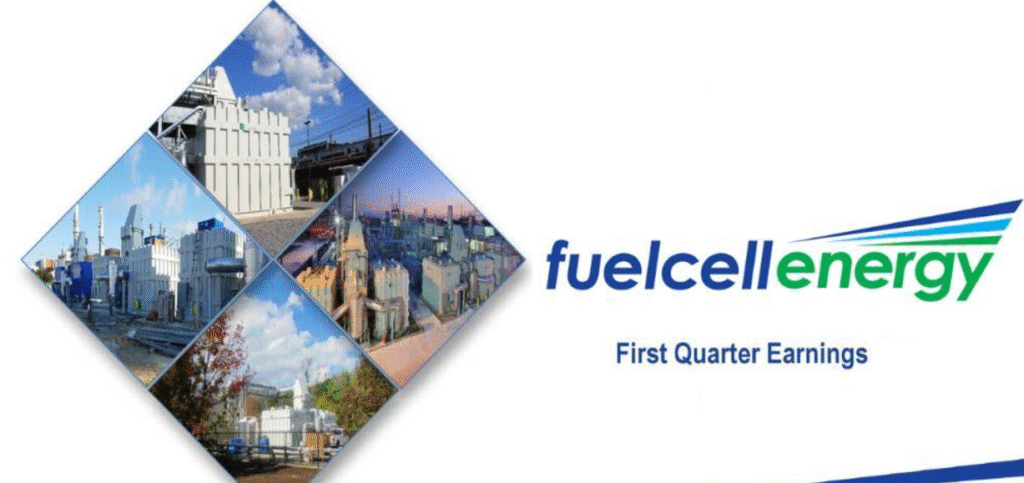
The FCEL Financial Report — Revenue Growth in a Challenging Marketplace
Top-Line Growth and Its Drivers
The most straightforward yet important takeaway from the latest earnings report is revenue growth, both in the quarter and the full fiscal year.
The fourth quarter’s $55.0 million in revenue represented a 12% increase from the same period last year. While modest in absolute terms, this growth belies the broader narrative: FuelCell Energy is scaling its commercial output, translating more backlog into realized revenue, and benefiting from service contracts that provide recurring income streams.
Notably:
- Product revenues increased materially, with $30.0 million recognized from deliveries and commissioning under a long-term service agreement with Gyeonggi Green Energy in South Korea.
- Service agreements revenue also expanded, rising from $5.6 million to $7.3 million, reflecting heightened maintenance and ongoing support demand for deployed fuel cell assets.
- Generation revenues ticked upward, evidencing stronger output from FuelCell’s own portfolio of operating systems.
By contrast, Advanced Technologies contract revenues declined slightly, as certain development and purchase order contributions from the prior year were not replicated in the quarter.
This revenue composition underscores a developing shift from research-heavy activity toward commercial execution and service monetization, signaling FuelCell Energy’s move from pure innovation toward scalable deployment.
Annual Revenue Highlights
For the full fiscal year, $158.2 million in total revenue — up 41% year-over-year — is one of the most notable achievements documented in the FCEL Financial Report. This longer-term growth narrative demonstrates that the company’s fuel cell systems are gaining traction in multiple markets and that the business is building broader revenue streams that weather short-term volatility.
Cost Structure and Margin Trends
A critical element of the latest earnings release is the narrowing of gross losses. For the quarter, the company reported a gross loss of $(6.6) million, a 39% reduction from the prior year’s $(10.9) million.
This improvement stems in part from:
- Stronger top-line volumes.
- Reduced manufacturing inefficiencies.
- Better scaling of service operations.
- Decreases in research and development (R&D) expenditure as strategic focus sharpens.
Operating expenses also reflected structural changes:
- Administrative and selling expenses declined modestly year-over-year, reflecting a tighter expense posture.
- R&D expenses fell significantly, largely due to reduced commercial development spending on non-core technologies relative to the prior year.
The company recorded non-cash impairment charges in connection with broader restructuring, indicating a thoughtful pruning of underperforming assets as management doubles down on the core carbonate fuel cell platform.
Taken together, these results show that FuelCell Energy is improving its margin profile, even if the company remains in the red. Investors often look for such discipline as an early signal of eventual profitability, especially in technology-heavy industrial firms where scaling economics can turn losses into profits once efficient volume thresholds are achieved.
Profitability Measures — Losses Narrow, But Path to Positive Earnings Remains
FuelCell Energy’s net loss in the fourth quarter was $(29.3) million, or $(0.85) per share, compared to $(39.6) million and $(2.21) per share in the prior comparative quarter. This dramatic narrowing — nearly a 60% reduction on a per-share basis — reflects successful cost containment and improved operational leverage.
On an annual basis:
- The company reported a full-year net loss of approximately $(191.4) million, compared with $(156.8) million the year before, reflecting the inherent investment phase of the business.
While still unprofitable, the trend is encouraging: losses are shrinking more rapidly than revenue, and non-GAAP measures like Adjusted EBITDA show meaningful improvement — evidence that the core business is heading toward financial sustainability.
Backlog Dynamics — A Key Indicator of Future Revenue
One of the most important elements highlighted by the FCEL Financial Report is the company’s backlog, which represents contracted work yet to be recognized as revenue. As of quarter-end, backlog totaled roughly $1.19 billion, up marginally from $1.16 billion the year prior.
This is significant for several reasons:
- It signals strong ongoing demand for FuelCell’s systems, particularly for large scale and long-term installations.
- Backlog growth — even modest — suggests that new contract awards are keeping pace with revenue recognition, sustaining a pipeline of future work.
- A large backlog can signal “installed base” longevity and recurring service opportunities that bolster long-term revenue quality.
For technology developers like FuelCell Energy, backlog is a leading indicator of future revenue and an important metric for investors assessing growth sustainability.
Strategic Shifts and Market Positioning
Perhaps the most consequential narrative emerging from the 2025 earnings release is FuelCell Energy’s strategic pivot toward data center power solutions.
Management publicly emphasized the company’s positioning to capture opportunities emerging from:
- Explosive electricity demand due to AI and high-performance computing workloads.
- Grid constraints and resiliency challenges, where distributed energy solutions — like FuelCell’s systems — can offer reduced downtime and reduced greenhouse gas emissions compared to traditional generation.
FuelCell is marketing its molten carbonate and carbonate fuel cell systems as solutions for resilient, onsite generation serving data centers — an industry predicted to grow dramatically in the coming decade. This market focus aligns with broader decarbonization efforts and the need for clean, reliable power in high-compute facilities.
The pivot also includes:
- Simplifying product lines.
- Increasing production scale at the Torrington, Connecticut manufacturing facility.
- Integrating advanced features like absorption chilling to manage thermal loads — critical for computing facilities.
Additionally, FuelCell Energy has secured Export-Import Bank financing for international projects, including a repeat financing agreement in Korea, which enhances liquidity and lowers financing costs for large renewable deployments.
Balance Sheet Strength — Cash Runway and Financial Flexibility
Cash position is essential for capital-intensive technology businesses, especially those not yet operating with sustained profitability. As of October 31, 2025, FuelCell Energy reported:
- Unrestricted cash and equivalents of approximately $278.1 million.
- Total cash, restricted cash, and short-term investments of approximately $341.8 million.
This ample cash runway provides:
- Stability through investment cycles.
- Funding for manufacturing expansion.
- Support for R&D initiatives aligned with core strategic markets.
It also reduces immediate financing risks, which can plague emerging energy technology companies as they scale.
The FCEL Stock Price Reaction — A Volatile Rally
The market’s reaction to the results was significant: the FuelCell Energy stock price surged over 30% in premarket and intraday trading shortly after the earnings release. This reflected investor enthusiasm for the revenue beat, narrowing losses, and strategic market focus, particularly the company’s positioning in the data center energy market — a rapidly expanding opportunity.
However:
- The stock remains volatile, with sharp daily moves following the earnings release.
- Even after the rally, shares trade below their prior multi-year highs, reflecting the long shadow of past losses and uncertainty over profitability timelines.
From a technical perspective, this price behavior reflects speculative interest as well as fundamental reassessment by growth-oriented investors who view the improving financials and new strategy as authentic catalysts.
Market Competitors and Strategic Positioning
FuelCell Energy operates in a broader energy transition ecosystem, competing and cooperating with varied segments including:
- Other fuel cell companies.
- Electrolyzer and hydrogen-focused firms.
- Microgrid and distributed energy storage providers.
- Traditional generators responding to decarbonization policies.
While some adjacent companies may enjoy broader scale or deeper pockets, FuelCell Energy’s differentiated focus on stationary carbonate fuel cells provides unique advantages in sectors like industrial power, district energy, and now data center resilience — areas with high growth potential and increasing relevance in a decarbonizing world.
Risks and Challenges to Monitor
Despite positive trends, several risks remain that investors considering FCEL stock must weigh:
- Continued operating losses and the uncertain timeline for sustained profitability.
- Dependency on large, capital-intensive projects that can have lumpy revenue recognition timing.
- Competitive pressure from alternative clean power technologies — including solid-oxide fuel cells, battery storage, hydrogen turbines, and sustainable energy solutions.
- Macroeconomic sensitivity, particularly in capital markets and clean energy policy environments.
The path to profitability is not guaranteed, and near-term performance may continue to exhibit volatility relative to broader markets.
Valuation and Investment Thesis — Buy, Hold, or Sell?
Given these dynamics, how should investors evaluate FuelCell Energy stock today?
Bullish Scenario — Data Center and Clean Power Momentum
- The company’s revenue growth, backlog, and strategic pivot create a compelling long-term growth narrative.
- Narrowing losses and improving margins suggest operational leverage that could translate into profitability as scale increases.
- A strong balance sheet supports expansion and product development.
In this scenario, long-term oriented investors may view FCEL stock as a buy on dips, especially if data center deployments accelerate and gross margins continue to improve.
Bearish Scenario — Profitability and Execution Risks
- Continued net losses and potential volatility in large project deliveries can dampen confidence.
- Competitive threats and execution risk in emerging markets like data center power may limit upside.
Here the stock may perform better as a hold for those already invested, or a cautious allocation for new investors with high risk tolerance and a multi-year investment horizon.
Recommended Positioning
- Long-Term Investors: BUY accumulation on weakness, with a time horizon of 3–5+ years.
- Short-Term Traders: HOLD or selectively trade around volatility and catalysts.
- Risk-Averse Investors: WAIT for clearer profitability signals before adding exposure.
Conclusion — A Development Story With Early Signs of Maturation
FuelCell Energy’s FCEL Financial Report for Q4 and Fiscal 2025 reveals a company transitioning from early-stage innovation to commercial growth. With revenue accelerating, losses narrowing, and a strategic pivot toward high-growth markets like data center power, FuelCell has laid important groundwork for future scale. The FuelCell Energy stock price reaction reflects optimism, but the investment thesis ultimately depends on successful execution and sustained improvement in financial performance.
For discerning investors willing to look beyond short-term earnings and volatility, this juncture may represent an opportune moment to position for the next phase of growth — while remaining mindful of the inherent risks in emerging industrial technology companies.