The recreational vehicle (RV) industry has long been viewed as a canary in the coal mine for the broader American economy. Sensitive to interest rates, fuel costs, and discretionary consumer sentiment, the sector has spent the last two years navigating a post-pandemic “hangover” characterized by bloated dealer inventories and cooling demand. However, on December 19, 2025, Winnebago Industries (NYSE: WGO) shattered the narrative of a prolonged slump. The company’s fiscal first-quarter 2026 results were not just a “beat”—they were a loud declaration that the outdoor lifestyle leader has successfully shifted from survival mode to a high-margin growth trajectory.
As of the market close on Friday, December 19, 2025, the WGO stock price surged to $43.64, representing a robust 8.21% gain on the day. Investors reacted with exuberance to a report that managed to grow revenues by double digits despite a macroeconomic backdrop that remains far from perfect. With a current market capitalization of approximately $1.23 billion and a forward-looking strategy that leans heavily into premiumization and AI-driven operational efficiency, the Winnebago Industries stock is once again appearing on the radars of value and growth investors alike.
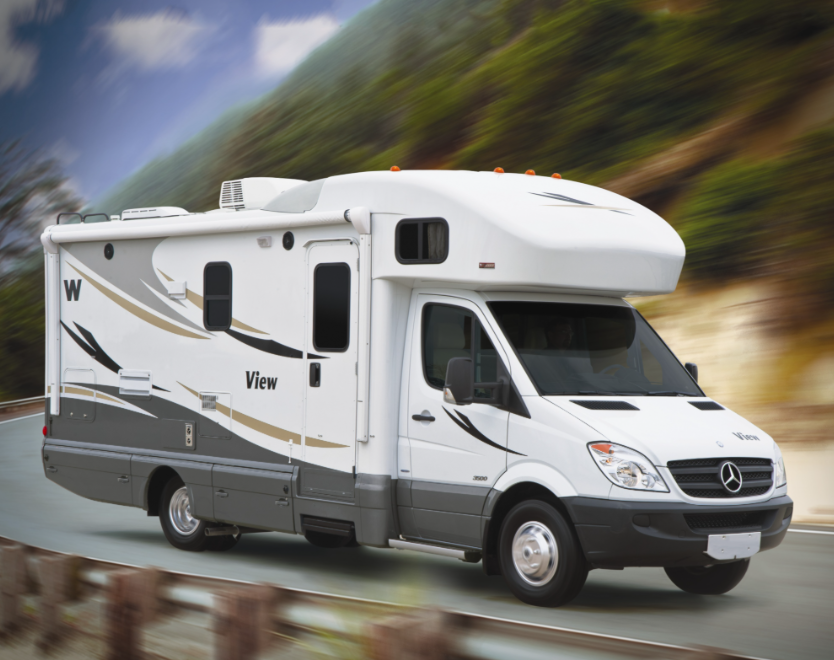
Decoding the FQ1 2026 Financial Report: A Masterclass in Operating Leverage
The WGO stock Financial Report for the period ended November 29, 2025, revealed a company that is firing on nearly all cylinders. Winnebago reported consolidated net revenues of $702.7 million, an impressive 12.3% increase compared to the $625.6 million recorded in the same quarter last year. This figure significantly outpaced the Wall Street consensus of approximately $636 million, representing a roughly 10.5% revenue surprise.
The most striking takeaway from the Winnebago Industries Earnings was the explosion in profitability metrics that had been suppressed for several quarters. Adjusted EBITDA more than doubled year-over-year to $30.2 million, a 109.7% increase. On the bottom line, adjusted diluted earnings per share (EPS) rocketed to $0.38, compared to an adjusted loss per share of $0.03 in the prior year. This massive swing into the black was fueled by several key factors that deserve a forensic look.
First, gross profit reached $89.0 million, a 15.9% increase, with gross margins expanding by 40 basis points to 12.7%. Management attributed this expansion primarily to volume leverage—the ability to spread fixed manufacturing costs over a larger number of units—and selective price increases that consumers, surprisingly, seem willing to absorb for the Winnebago brand. However, this was partially offset by a 40 basis point increase in warranty expenses, which rose to 3.6% of net revenues.
Second, the company’s operating income rebounded sharply. After an operating loss of $0.9 million in the first quarter of fiscal 2025, Winnebago posted an operating profit of $13.8 million in FQ1 2026. This turnaround is even more impressive when considering that it was achieved in a retail environment where total industry RV registrations actually declined by 7.6% in October 2025. This suggests that Winnebago is effectively taking market share from competitors who lack its brand equity and dealer network strength.
Segment Deep-Dive: Where the Growth is Hiding
To truly understand the WGO stock value proposition, one must look at the three distinct engines driving the machine:
- Towable RV Segment ($293.4 Million, +15.5%): This segment was the star of the quarter. Growth was driven by higher unit volumes and a strategic focus on the “Grand Design” brand, which continues to resonate with younger families looking for high-quality entry-level fifth wheels and travel trailers. Operating income in this segment rose 24.8% to $11.1 million, proving that volume-driven scale is the key to towable profitability.
- Motorhome RV Segment ($308.5 Million, +13.5%): Perhaps the most surprising recovery, this segment swung from a $3.2 million operating loss last year to an $8.2 million profit this quarter. While consumers are generally more sensitive to the higher price points of motorhomes, Winnebago saw a favorable product mix shift. Customers are opting for “Adventure Wagons” and Class C units that offer more utility for off-grid travel, allowing the segment to realize a 390 basis point improvement in operating margins.
- Marine Segment ($92.5 Million, +2.2%): While the 2.2% growth seems modest, management views it as a significant win given the “continued softness” in the broader boating industry. Winnebago’s Barletta brand has achieved a staggering 9.1% market share in the U.S. Aluminum Pontoon segment, up from zero in 2017. This diversification into the marine space provides a critical buffer against the inherent cyclicality of the RV market.
Product Strategy: The “Premium” Moat and AI-Powered Efficiency
Winnebago’s management, led by CEO Michael Happe, has been vocal about refusing to participate in a “race to the bottom” on price. The company’s strategy is clearly focused on innovation-led premiumization. In the FQ1 call, the company highlighted the success of its new “Smart-Connect” platforms, which integrate AI-driven diagnostic and entertainment systems into their flagship motorhomes.
This is more than just marketing fluff; it is a defensive strategy aimed at ecosystem lock-in. By providing a superior digital experience on the road—including remote battery monitoring for boondockers and automated route optimization for mountain passes—Winnebago is creating a brand affinity that allows for higher price realization. This strategic choice is the primary reason why gross margins expanded even as competitors were forced to increase promotional discounting.
Furthermore, the company is leveraging AI within its own supply chain to tackle the “Inventory Monster.” The Winnebago Industries stock has historically been punished by investors for its inventory volatility. However, new predictive analytics tools have allowed the company to keep inventory turns at 1.8x during the quarter. Management confirmed a long-term target of 2.0x turns, which would align the company with industry best practices and free up millions in working capital. By “right-sizing” production schedules to real-time market demand, Winnebago is avoiding the massive year-end liquidations that plague lesser manufacturers.
The Macro Play: Interest Rates and the “Retail Appetite”
The future trajectory of the WGO stock price is inextricably linked to the Federal Reserve’s interest rate path. As we move into 2026, the market is pricing in a more stable—and potentially declining—rate environment. This is the single biggest “green light” for RV buyers, as approximately 70% of units are financed.
CEO Michael Happe noted during the earnings call that while “retail appetite” is not yet back to the 2021 frenzy, foot traffic at recent RV shows has been “meaningfully higher” than 2024 levels. Furthermore, the used-RV market is finally normalizing. For the past two years, cheap used units purchased during the pandemic flooded the market, suppressing new unit sales. That surplus has cleared, which is forcing prospective buyers back toward new, warranted products—a trend that the WGO stock Financial Report suggests is already boosting dealership orders.
Financial Health: The De-leveraging Story
A key highlight of the recent Winnebago Industries Earnings was the rapid improvement of the balance sheet. Winnebago successfully reduced its net leverage ratio to 2.7x, down from 3.1x at the end of fiscal 2025. With $181.7 million in cash and cash equivalents, the company has the liquidity to navigate short-term shocks while continuing its aggressive R&D roadmap.
The company also generated $25.4 million in net operating cash flow this quarter, a massive reversal from the $16.7 million outflow in the same quarter last year. This cash flow generation is the “oxygen” that allows the company to reward shareholders. In October, the company declared a $0.35 quarterly dividend, which at the current WGO stock price offers a reliable 3.2% yield. For a company in a cyclical industry, maintaining 46 consecutive quarters of dividend payments is a rare signal of financial maturity and board confidence.
2026 Guidance: Raising the Bar
Perhaps the most bullish signal was the company’s decision to raise its full-year fiscal 2026 guidance. The new targets are as follows:
- Consolidated Net Revenues: $2.8 billion to $3.0 billion (up from $2.75B–$2.95B).
- Adjusted EPS: $2.10 to $2.80 (up from $2.00–$2.70).
- Reported GAAP EPS: $1.40 to $2.10.
At the midpoint of $2.45, the adjusted EPS guidance represents a 47% increase from fiscal 2025’s $1.67. This aggressive target suggests that management expects the margin expansion seen in Q1 to accelerate as the spring buying season begins in early 2026.
Deep Analysis of Revenue Channels and Market Penetration
The 12.3% revenue surge in the WGO stock Financial Report isn’t just about selling more units; it’s about a fundamental shift in who is buying and what they are buying. Winnebago has successfully expanded its reach into two critical demographics: the “Next-Gen” camper and the “Luxury Nomad.”
The “Next-Gen” segment consists primarily of Gen Z and Millennial buyers who view the RV as a mobile office or a vessel for “experiential travel.” Winnebago’s investment in the Grand Design “Lineage” shower system (voted Innovation of the Year) and the Newmar “Freedom Aire” (Top RV Debut) is aimed squarely at this group. These innovations address specific pain points—water conservation and air quality—that previous generations ignored but are deal-breakers for modern, eco-conscious travelers.
In the “Luxury Nomad” segment, Winnebago’s Newmar brand continues to dominate the Class A Diesel market. The Winnebago Industries Earnings call highlighted that the King Aire 4531 was named “Type A Diesel RV of the Year.” By capturing the high end of the market, Winnebago insulates itself from the most price-sensitive consumers, maintaining its gross margins even when the broader economy softens. This “bi-modal” strategy—winning at the entry-level with Grand Design and at the ultra-premium level with Newmar—is a textbook example of market diversification.
Operational Efficiency: The Role of Vertical Integration
One often-overlooked component of the Winnebago Industries stock story is the company’s high level of vertical integration. Unlike many competitors who are essentially “assemblers” of parts made by third-party suppliers, Winnebago manufactures many of its own critical components. This includes chassis modifications, fiberglass components, and custom furniture.
In an era of supply chain volatility, this vertical integration is a massive competitive advantage. It allows Winnebago to maintain stricter quality control, reducing the warranty expenses that management noted as a slight headwind this quarter. More importantly, it allows the company to capture the profit margin that would otherwise go to suppliers. As the company moves toward its goal of $3.0 billion in annual revenue, this internal margin capture will become an increasingly powerful driver of EPS growth.
The Competitive Landscape: Winnebago vs. Thor and Forest River
No analysis of WGO stock is complete without comparing it to its primary rivals: Thor Industries and Forest River. While Thor is larger in terms of total revenue, Winnebago has historically maintained higher operating margins due to its focus on the premium segment. In FQ1 2026, Winnebago’s 12.7% gross margin likely outperformed Thor’s expected margins for the same period.
The “Barletta advantage” in the Marine segment also differentiates Winnebago from its RV-centric peers. By owning nearly 10% of the pontoon market, Winnebago has access to a completely different retail cycle. Boating season often peaks at different times than RV season, allowing Winnebago to maintain a more consistent level of manufacturing activity throughout the year. This diversification is a key reason why we view the Winnebago Industries stock price as having a higher floor than its less-diversified competitors.
Market Outlook and Price Prediction for 2026
The market’s reaction on December 19—an 8% jump—is likely just the beginning of a broader re-rating. As the Winnebago Industries Earnings continue to prove that the company can thrive in a normalized interest rate environment, we expect institutional investors to increase their weightings in the stock.
Our 12-Month Price Target: $54.00
This target is based on a 22x forward P/E multiple applied to our conservative 2026 EPS estimate of $2.45. This represents approximately 24% upside from the current WGO stock price of $43.64. When combined with the 3.2% dividend yield, the total expected return for shareholders over the next year is roughly 27%.
Final Investment Recommendation: Buy / Strong Buy
The latest WGO stock Financial Report has eliminated any doubt about the company’s recovery. Winnebago is a high-quality, dividend-paying market leader trading at a reasonable valuation. Whether you are a value investor looking for a high-yield dividend play or a growth investor looking to play the recovery of the American consumer, Winnebago offers a compelling opportunity. The “Innovation Engine” is humming, the “Inventory Monster” is tamed, and the “Premium Moat” is deeper than ever. It’s time to get on board.
Leave a Reply